
Dental Lockjaw Lawsuits
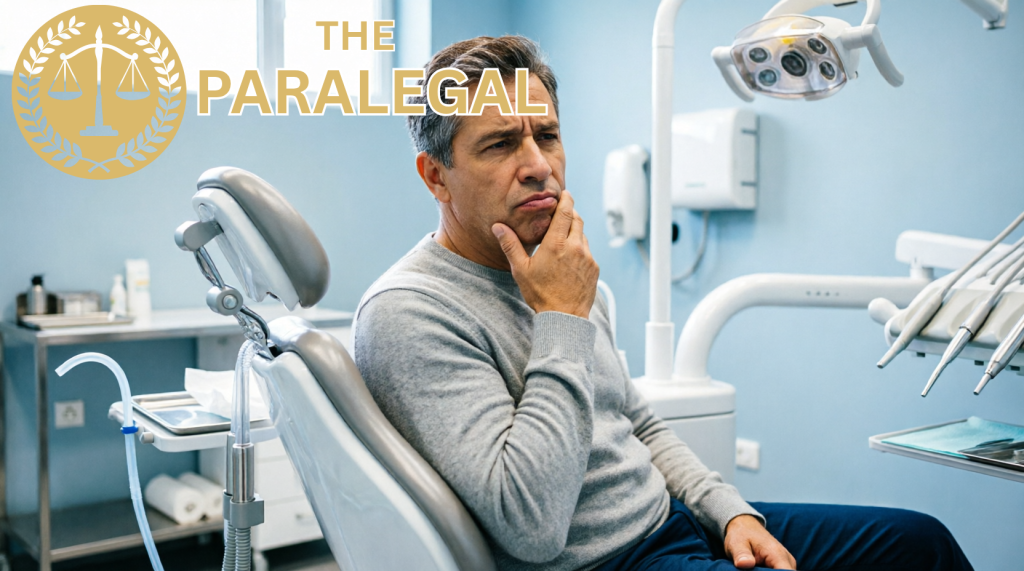
Can I sue my dentist for lockjaw?. – Lockjaw, medically known as trismus, is a distressing condition characterised by a reduced ability or complete inability to open the mouth. It can cause severe pain, difficulty eating, speaking, and maintaining oral hygiene, and in serious cases can affect breathing.
When lockjaw occurs as a result of dental treatment, patients often ask a critical question: can I sue my dentist for lockjaw?
The answer, in many circumstances, is yes.
| Can I sue my dentist | Bad root canal | Bad crown | Lockjaw |
Can I sue my dentist for lockjaw?. This article explores your legal rights, the types of dental faults that can lead to lockjaw, the compensation you may be entitled to, and how the paralegal at Impel Legal can intervene at every stage to protect your interests and guide you through what is often a confusing and emotionally draining process.
What Is Lockjaw and How Does It Relate to Dental Treatment?
Lockjaw or trismus occurs when the muscles of mastication, the temporomandibular joint (TMJ), or surrounding structures become inflamed, damaged, or infected, restricting the movement of the jaw. In a dental context, lockjaw can arise from surgical complications, anaesthetic errors, post-operative infections, nerve damage, or failures in the standard of care provided by a dental professional.
The condition can be temporary, lasting a few weeks, or it can become chronic and permanent, fundamentally altering a patient’s quality of life. If you suspect that your lockjaw is the direct result of dental negligence or substandard treatment, the paralegal at Impel Legal can assess your situation, review your dental records, and advise you on whether you have a viable claim.
The paralegal at Impel Legal will also explain the time limits applicable to your case and ensure that no critical deadlines are missed while you focus on your recovery.
Comprehensive Examples of Dental Faults That Can Cause Lockjaw
Dental negligence leading to lockjaw can manifest in numerous ways. Below are comprehensive examples of the faults that may give rise to a claim.
Surgical Errors During Tooth Extraction.
When a dentist removes a tooth, particularly a wisdom tooth or an impacted molar, excessive force, improper angulation of instruments, or failure to section the tooth correctly can damage the surrounding bone, muscles, or the TMJ. This trauma can lead to inflammation, scarring, and ultimately lockjaw. In some cases, fragments of tooth or bone are left in the socket, causing infection and restricted jaw movement.
Anaesthetic Complications.
Local anaesthetic injections, particularly inferior alveolar nerve blocks, must be administered with precision. If the needle penetrates too deeply, strikes the medial pterygoid muscle, or introduces anaesthetic solution into the wrong tissue plane, it can cause haematoma, muscle spasm, or nerve damage resulting in trismus. General anaesthetic errors during oral surgery, such as improper intubation or excessive jaw manipulation while the patient is unconscious, can also cause lockjaw.
Dental Implant Surgery Failures.
Implant placement requires meticulous planning and execution. If an implant is positioned incorrectly, if the surgeon drills too close to the TMJ or masticatory muscles, or if there is a failure to identify anatomical structures through proper imaging, the resulting trauma can cause persistent lockjaw. Additionally, post-implant infections that are not promptly treated can spread to the jaw muscles.
Root Canal Treatment Complications.
During root canal therapy, prolonged mouth opening, over-instrumentation beyond the apex of the tooth, or perforation of the root can introduce infection into surrounding tissues. If the infection spreads to the masticatory spaces, it can cause severe trismus. Failure to prescribe appropriate antibiotics or to refer the patient for urgent treatment when signs of spreading infection appear constitutes a breach of the duty of care.
Temporomandibular Joint Damage.
Procedures that require the patient’s mouth to remain open for extended periods, such as complex restorative work, multiple extractions in one session, or orthodontic adjustments, can strain or damage the TMJ. If the dentist fails to provide adequate rest periods, uses improper mouth props, or ignores the patient’s reports of jaw pain during the procedure, the resulting TMJ dysfunction can lead to lockjaw.
Failure to Diagnose or Treat Infection.
Post-operative infections following any dental procedure must be identified and managed promptly. If a dentist dismisses a patient’s complaints of swelling, pain, and restricted jaw movement, or fails to prescribe antibiotics, arrange drainage, or refer to a maxillofacial surgeon, the infection can worsen and cause permanent trismus.
Inadequate Pre-Operative Assessment.
Before undertaking any procedure, a dentist must take a thorough medical history, review relevant imaging, and assess the patient’s suitability for treatment. Failure to identify pre-existing TMJ disorders, bleeding disorders, allergies to anaesthetic agents, or anatomical variations can result in avoidable complications including lockjaw.
Poor Post-Operative Care and Follow-Up.
After surgical dental procedures, patients should receive clear aftercare instructions and be offered appropriate follow-up appointments. If a dentist fails to advise on jaw exercises, does not schedule a review, or ignores follow-up requests from a patient experiencing increasing stiffness, the window for early intervention may be lost, and temporary trismus can become permanent.
In each of these scenarios, the paralegal at Impel Legal can intervene by obtaining and reviewing your dental records, arranging for an independent dental or maxillofacial expert to assess whether the standard of care fell below what is expected of a reasonably competent practitioner, and building a structured case file that identifies the specific breaches. The paralegal at Impel Legal will also liaise with the General Dental Council if a formal complaint about the practitioner’s fitness to practise is warranted, and will coordinate with medical experts to document the full extent of your injury.
Scenarios: How Lockjaw Claims Arise in Practice and How the Paralegal at Impel Legal Can Intervene
Scenario One: Wisdom Tooth Extraction Gone Wrong. Sarah, a 28-year-old teacher from Manchester, visited her private dentist for the removal of an impacted lower wisdom tooth. During the procedure, the dentist used excessive force and failed to section the tooth, fracturing the surrounding bone. Sarah was sent home with standard aftercare leaflets. Over the following two weeks, she developed increasing pain, swelling, and an inability to open her mouth beyond ten millimetres. She returned to the practice three times but was told it was normal healing. Eventually, she attended A&E, where a CT scan revealed a retained bone fragment and a significant infection in the masticatory space. Sarah required surgical drainage and a course of intravenous antibiotics. She was left with chronic trismus requiring ongoing physiotherapy. The paralegal at Impel Legal intervened by obtaining Sarah’s full dental records, including operative notes and radiographs, and instructed an independent oral and maxillofacial surgeon to provide an expert report. The paralegal at Impel Legal identified that the dentist had failed to section the tooth, had not taken adequate post-operative radiographs to check for retained fragments, and had failed to recognise and treat the developing infection on three separate occasions. The paralegal at Impel Legal drafted the letter of claim, quantified Sarah’s losses including loss of earnings from teaching, physiotherapy costs, and pain and suffering, and managed all correspondence with the dentist’s indemnity insurers. Click here to contact the paralegal at Impel Legal.
Scenario Two: Implant Surgery and TMJ Damage. David, a 52-year-old accountant from Birmingham, underwent placement of two dental implants in his lower jaw. The surgeon did not order a cone beam CT scan before the procedure and relied solely on a two-dimensional panoramic radiograph. During drilling, the implant site perforated the lingual cortical plate, causing trauma to the medial pterygoid muscle. David developed severe trismus within forty-eight hours. The surgeon attributed the stiffness to normal post-operative swelling and advised warm compresses. Six months later, David’s jaw opening remained restricted to fifteen millimetres, and he required referral to a TMJ specialist. The paralegal at Impel Legal intervened by securing David’s pre-operative and operative records, obtaining the imaging that had been taken, and instructing an expert in implantology who confirmed that the failure to obtain three-dimensional imaging constituted a breach of the standard of care. The paralegal at Impel Legal also arranged for a second expert in TMJ disorders to assess David’s prognosis and future treatment needs. The paralegal at Impel Legal then prepared a comprehensive schedule of loss covering past and future medical expenses, loss of earnings, and general damages for pain, suffering, and loss of amenity. Click here to contact the paralegal at Impel Legal.
Scenario Three: Anaesthetic Error During Routine Filling. Priya, a 35-year-old graphic designer from London, attended her NHS dental practice for a routine filling. The dentist administered an inferior alveolar nerve block but inserted the needle too posteriorly, penetrating the parotid region and causing a haematoma in the medial pterygoid muscle. Priya experienced immediate pain and, over the following days, progressive trismus. The dentist did not document the complication and did not arrange follow-up. Three weeks later, Priya’s jaw opening was limited to twelve millimetres. She was eventually referred to an oral surgeon who confirmed the haematoma and prescribed a course of physiotherapy and anti-inflammatory medication. The paralegal at Impel Legal intervened by submitting a subject access request for Priya’s clinical notes, identifying the absence of documentation regarding the anaesthetic complication, and instructing an expert in dental anaesthesia. The paralegal at Impel Legal advised Priya on the NHS complaints procedure and, when the NHS trust’s response was inadequate, escalated the matter by preparing a clinical negligence claim. The paralegal at Impel Legal also assisted Priya in making a complaint to the General Dental Council regarding the failure to document the incident. Click here to contact the paralegal at Impel Legal.
Scenario Four: Prolonged Procedure Without Adequate Rest Periods. James, a 45-year-old builder from Leeds, underwent a lengthy restorative session lasting over four hours during which his mouth was held open with a prop. He reported jaw pain twice during the procedure, but the dentist continued without offering a rest period. Following the appointment, James developed TMJ dysfunction and trismus that persisted for eight months, affecting his ability to eat, speak clearly at work, and perform his duties as a builder. The paralegal at Impel Legal intervened by reviewing the treatment plan and clinical notes, which confirmed the duration of the procedure and the absence of documented rest periods. The paralegal at Impel Legal instructed an expert in restorative dentistry who confirmed that best practice requires regular rest intervals during prolonged procedures and that the dentist’s failure to respond to the patient’s complaints constituted negligence. The paralegal at Impel Legal calculated James’s loss of earnings, the cost of private TMJ physiotherapy, and the impact on his career, and presented a full claim to the dental practice’s indemnity provider. Click here to contact the paralegal at Impel Legal.
Scenario Five: Post-Operative Infection Ignored After Root Canal. Aisha, a 40-year-old nurse from Cardiff, underwent root canal treatment on a lower molar. During the procedure, the dentist over-instrumented beyond the root apex, pushing debris into the periapical tissues. Aisha developed swelling and restricted jaw opening within three days. She contacted the practice but was advised to take over-the-counter painkillers. A week later, the swelling had spread, and her jaw opening was reduced to eight millimetres. She attended an urgent care centre where she was diagnosed with a spreading odontogenic infection requiring surgical drainage and intravenous antibiotics. The paralegal at Impel Legal intervened by obtaining Aisha’s dental records, radiographs, and the urgent care centre’s clinical notes. An independent endodontic expert confirmed that the over-instrumentation and the failure to prescribe antibiotics or arrange urgent review constituted a breach of duty. The paralegal at Impel Legal prepared the claim, including damages for the additional surgery, the extended recovery period, Aisha’s loss of nursing shifts, and the psychological impact of the ordeal.
In every one of these scenarios, the paralegal at Impel Legal serves as the central point of contact, managing the legal process from the initial free consultation through to resolution. The paralegal at Impel Legal ensures that evidence is preserved, expert reports are commissioned, correspondence is handled professionally, and the claimant is kept informed at every stage. Where a claim needs to be issued in court, the paralegal at Impel Legal will prepare the necessary documentation and coordinate with barristers or solicitors as required, ensuring the claimant’s case is presented as strongly as possible. Click here to contact the paralegal at Impel Legal.
UK Laws That Relate to Lockjaw Claims Against Dentists
Several key pieces of UK legislation and legal principles govern dental negligence claims and consumer protection in this context.
The Consumer Rights Act 2015. This Act applies to private dental treatment and provides that services must be performed with reasonable care and skill, within a reasonable time, and for a reasonable price. Under Sections 49 to 54, if a service does not conform to these standards, the consumer has the right to require repeat performance, a price reduction, or a refund. If dental treatment falls below the required standard and causes lockjaw, the consumer can rely on these provisions. The paralegal at Impel Legal can advise you on whether the Consumer Rights Act 2015 applies to your treatment and can frame your claim accordingly, ensuring that all available remedies are pursued.
The Supply of Goods and Services Act 1982. Although much of this Act has been superseded by the Consumer Rights Act 2015 for consumer contracts, it remains relevant in certain business-to-business or non-consumer contexts. It imposes implied terms that services will be carried out with reasonable care and skill. The paralegal at Impel Legal will determine which legislative framework applies to your specific circumstances.
The NHS Act 2006 and NHS Complaints Regulations. For treatment provided on the NHS, the duty of care is governed by the NHS Act 2006 and the associated regulations. Patients have the right to make a formal complaint under the NHS complaints procedure, and if the matter is not resolved, to escalate to the Parliamentary and Health Service Ombudsman. Clinical negligence claims against NHS dental providers follow the same legal principles as private claims but may involve NHS Resolution as the defending body. The paralegal at Impel Legal can guide you through the NHS complaints process, draft your complaint letter, and advise on whether a parallel clinical negligence claim is appropriate. The paralegal at Impel Legal will also manage correspondence with NHS Resolution if a claim is pursued. Click here to contact the paralegal at Impel Legal.
The Limitation Act 1980. Under Section 11 of the Limitation Act 1980, a claim for personal injury, including dental negligence causing lockjaw, must generally be brought within three years of the date of the negligent act or the date of knowledge (the date you became aware, or ought reasonably to have become aware, that your injury was attributable to the dental treatment). For children, the three-year period does not begin until their eighteenth birthday. For individuals who lack mental capacity, the limitation period is suspended. The paralegal at Impel Legal will assess the limitation position at the outset of every case and ensure that proceedings are issued within the applicable time limit. If the limitation period is approaching, the paralegal at Impel Legal will take urgent steps to protect your position, including issuing a protective claim form if necessary. Click here to contact the paralegal at Impel Legal.
The Bolam Test and Bolitho Addendum. In clinical negligence claims, the court applies the Bolam test, established in Bolam v Friern Hospital Management Committee [1957], which asks whether the dentist’s conduct would be supported by a responsible body of dental opinion. The Bolitho v City and Hackney Health Authority [1997] addendum requires that the body of opinion relied upon must have a logical basis. If no reasonable dentist would have acted in the way the defendant did, negligence is established. The paralegal at Impel Legal will work with expert witnesses to ensure that the Bolam and Bolitho principles are properly addressed in the expert evidence, strengthening your claim.
The General Dental Council Standards. The GDC sets out the standards of conduct, performance, and ethics expected of dental professionals in the UK. These include maintaining patient safety, obtaining valid consent, keeping accurate records, and raising concerns when care falls short. A breach of GDC standards can support a negligence claim and may also form the basis of a fitness-to-practise complaint. The paralegal at Impel Legal can assess whether the treating dentist’s conduct breached GDC standards and can assist you in lodging a complaint with the GDC alongside your civil claim.
The Mental Capacity Act 2005. If the patient who suffered lockjaw lacks the capacity to manage their own legal affairs, a litigation friend may be appointed to bring the claim on their behalf. The paralegal at Impel Legal can advise families on this process and coordinate with the Court of Protection where necessary.
The Data Protection Act 2018 and UK GDPR. Patients have the right to access their dental records under the Data Protection Act 2018 and the UK GDPR. These records are essential evidence in any lockjaw claim. The paralegal at Impel Legal will submit subject access requests to the dental practice, NHS trust, or hospital on your behalf, ensuring that records are provided within the statutory one-month period and that any refusals or delays are challenged promptly.
The Occupiers’ Liability Act 1957 and the Health and Safety at Work etc. Act 1974. In rare cases where the lockjaw arises from an environmental factor at the dental practice, such as a faulty dental chair mechanism causing jaw trauma, these statutes may be relevant. The paralegal at Impel Legal will consider all possible avenues of liability.
The Human Rights Act 1998. Article 8 of the European Convention on Human Rights, incorporated into UK law by the Human Rights Act 1998, protects the right to private and family life. In the context of NHS treatment, failures that cause significant harm, including lockjaw, may engage Article 8 considerations, particularly where there are systemic failures in care provision. The paralegal at Impel Legal will consider whether any human rights arguments strengthen your claim, particularly in cases involving NHS treatment.
In every aspect of the legal framework outlined above, the paralegal at Impel Legal plays a vital role in interpreting how the law applies to your specific facts, ensuring that the correct legal basis is pleaded, and that all procedural requirements are met. The paralegal at Impel Legal will explain the relevant law to you in plain English, so you understand your rights and the strengths and weaknesses of your case at every stage.
Consumer Protection: Repair, Refund, and Compensation
When dental treatment results in lockjaw, the consumer is protected by a combination of statutory rights, common law principles, and regulatory frameworks. Understanding what you can claim and how to claim it is essential, and the paralegal at Impel Legal is available to explain each option in detail.
The Right to a Repair or Repeat Performance. Under the Consumer Rights Act 2015, if dental treatment has not been performed with reasonable care and skill, the consumer has the right to require the service to be repeated or corrected, provided this is possible and proportionate. In the context of lockjaw, this might mean corrective surgery, additional treatment to address the underlying cause of the trismus, or remedial physiotherapy arranged and funded by the dental practice. The paralegal at Impel Legal can write to the dental practice on your behalf requesting repeat performance or corrective treatment, setting out the legal basis for the request and a reasonable deadline for compliance. If the practice refuses or fails to respond, the paralegal at Impel Legal will advise on the next steps. Click here to contact the paralegal at Impel Legal.
The Right to a Refund or Price Reduction. Where the dental service was not performed to the required standard, the consumer may be entitled to a full or partial refund of the fees paid. Under Sections 54 and 55 of the Consumer Rights Act 2015, if the service does not conform to the contract, the consumer can claim a price reduction of up to the full amount paid. This is particularly relevant where the treatment that caused the lockjaw was entirely unsuccessful or where the consumer has had to pay a different provider to correct the damage. For NHS patients, while a direct refund of NHS charges may not apply in the same way, the patient can claim the cost of private corrective treatment as part of a negligence claim. The paralegal at Impel Legal will calculate the appropriate refund or price reduction and include it in the claim, ensuring that you are not left out of pocket for treatment that was negligently performed.
Compensation for Pain, Suffering, and Loss of Amenity. In addition to a refund or corrective treatment, a patient who has suffered lockjaw due to dental negligence is entitled to general damages for pain, suffering, and loss of amenity. The amount depends on the severity and duration of the trismus, whether it is temporary or permanent, the impact on daily life, eating, speaking, and working, and any associated psychological harm such as anxiety or depression. The Judicial College Guidelines provide bracket figures for various injuries, and the paralegal at Impel Legal will use these guidelines, together with expert medical evidence, to value your claim accurately. The paralegal at Impel Legal will ensure that the full impact of the lockjaw on your life is documented and reflected in the compensation sought.
Compensation for Financial Losses. Beyond general damages, you may be entitled to special damages covering quantifiable financial losses. These can include loss of earnings if you were unable to work due to the lockjaw or the corrective treatment, the cost of private medical or dental treatment to address the trismus, physiotherapy and rehabilitation costs, travel expenses to medical appointments, the cost of prescription medications, and any necessary adaptations to your diet or lifestyle. If the lockjaw is permanent, future losses including ongoing treatment, reduced earning capacity, and the cost of care must also be claimed. The paralegal at Impel Legal will compile a detailed schedule of special damages, gathering receipts, invoices, payslips, and expert reports to substantiate every element of your financial loss. The paralegal at Impel Legal will also consider whether an interim payment can be sought to cover immediate treatment costs while the claim is ongoing.
The Role of the General Dental Council and Regulatory Protection. Consumers are further protected by the regulatory framework overseen by the General Dental Council. If a dentist’s conduct falls below the expected standard, a patient can make a complaint to the GDC, which has the power to investigate, impose conditions on the dentist’s registration, suspend them, or remove them from the register. While a GDC complaint does not itself result in financial compensation, it can be an important part of holding the practitioner accountable and can sometimes prompt the dentist’s indemnity insurer to engage more constructively with a compensation claim. The paralegal at Impel Legal can draft and submit the GDC complaint on your behalf, ensuring that it is clearly structured, references the relevant GDC standards, and includes all supporting evidence.
Dental Indemnity and Insurance. Most dental practitioners in the UK carry professional indemnity insurance, either through organisations such as the Dental Protection, Dental Defence Union, or Dental Protection Limited, or through commercial insurers. When a claim is made, it is typically the indemnity provider that handles the defence and any settlement. The paralegal at Impel Legal will identify the relevant indemnity provider and manage all communications, ensuring that your claim is dealt with fairly and without unnecessary delay. The paralegal at Impel Legal will also protect you from any pressure to accept a low settlement offer and will negotiate firmly on your behalf.
Whether you received treatment privately or on the NHS, the paralegal at Impel Legal can intervene to ensure your consumer rights are fully enforced. The paralegal at Impel Legal will advise you on the most appropriate combination of remedies, whether that is a refund, corrective treatment, a formal complaint, a negligence claim, or a combination of all of these. The paralegal at Impel Legal will also advise you on the merits of your case at an early stage, so you can make informed decisions about how to proceed without incurring unnecessary cost or stress.
The Claims Process: What to Expect and How the Paralegal at Impel Legal Supports You
The process of bringing a lockjaw claim against a dentist typically follows a structured path. It begins with an initial consultation and case assessment, during which the paralegal at Impel Legal will listen to your account, review any documents you have, and provide an honest opinion on the merits of your claim. If the case has merit, the paralegal at Impel Legal will obtain your dental records, commission expert evidence, and prepare a detailed letter of claim in accordance with the Pre-Action Protocol for the Resolution of Clinical Disputes. The defendant, or their indemnity insurer, will then investigate and respond. If liability is admitted, the paralegal at Impel Legal will negotiate a fair settlement. If liability is denied, the paralegal at Impel Legal will advise on issuing court proceedings and will manage the litigation process, including disclosure of documents, exchange of witness statements and expert reports, and preparation for trial if necessary. Throughout this process, the paralegal at Impel Legal will keep you informed, explain each step in clear language, and ensure that you are supported not just legally but also practically, for example by signposting you to medical support services, counselling, or patient advocacy organisations. The paralegal at Impel Legal understands that a lockjaw injury can be isolating and distressing, and will treat your case with the sensitivity and dedication it deserves.
Funding Your Claim
The paralegal at Impel Legal will discuss funding options with you at the outset. Depending on the circumstances, your claim may be funded through a Conditional Fee Agreement, often referred to as a no-win, no-fee arrangement, through legal expenses insurance attached to your home or motor insurance policy, through private funding, or, in limited cases, through legal aid. The paralegal at Impel Legal will explain the costs implications of each option clearly, so there are no surprises, and will ensure that you understand any success fees or deductions before you commit. The paralegal at Impel Legal will also explore whether you are eligible for any fee exemptions or reductions, particularly if you are on a low income or receiving certain benefits.
Time Limits and Urgency
As noted above, the Limitation Act 1980 imposes a three-year time limit for personal injury claims. However, it is always advisable to seek legal advice as soon as possible after the injury occurs. Evidence is fresher, witnesses’ memories are clearer, and dental records are more readily available. Early intervention also allows for prompt medical treatment and rehabilitation, which can improve your prognosis and reduce the long-term impact of the lockjaw. The paralegal at Impel Legal urges anyone who has developed lockjaw following dental treatment to make contact without delay. The paralegal at Impel Legal will conduct an urgent initial assessment and, if necessary, take immediate steps to preserve evidence and protect your limitation position. The paralegal at Impel Legal can also advise on interim remedies, such as obtaining an urgent referral to a maxillofacial specialist, while the legal claim is being prepared.
Conclusion
Lockjaw caused by dental treatment is not something you should simply endure. The law in the United Kingdom provides robust protections for patients and consumers, and you have clear rights to seek corrective treatment, a refund, and full compensation for the harm you have suffered. Whether your lockjaw resulted from a surgical error, an anaesthetic complication, a failure to diagnose infection, or any other form of dental negligence, you do not have to navigate the legal process alone. The paralegal at Impel Legal is here to intervene at every stage, from the first conversation to the final resolution, providing expert, compassionate, and determined support. The paralegal at Impel Legal will fight to ensure that you receive the justice, the care, and the compensation you deserve. If you or someone you know is suffering from lockjaw following dental treatment, contact the paralegal at Impel Legal today for a confidential, no-obligation consultation.
Disclaimer
This article is provided for general informational purposes only and does not constitute legal advice, medical advice, or a substitute for professional consultation. The information contained herein is accurate to the best of our knowledge as at the date of publication but may not reflect subsequent changes in the law, clinical guidance, or regulatory requirements. Every case is unique, and the outcome of any claim will depend on its specific facts and circumstances. The paralegal at Impel Legal and Impel Legal accept no liability for any loss, damage, or inconvenience arising from reliance on the information in this article. If you believe you have a legal claim or require advice on a dental negligence matter, you should seek personalised professional advice. The paralegal at Impel Legal can be contacted to arrange a confidential consultation. Nothing in this article creates a solicitor-client or paralegal-client relationship. If you are experiencing a medical emergency, please contact NHS 111, your GP, or attend your nearest Accident and Emergency department immediately.