
Inaccurate Electric Billing and Overcharging:
How to Dispute Massive, Unexpected Bill Spikes or Inaccurate Estimation
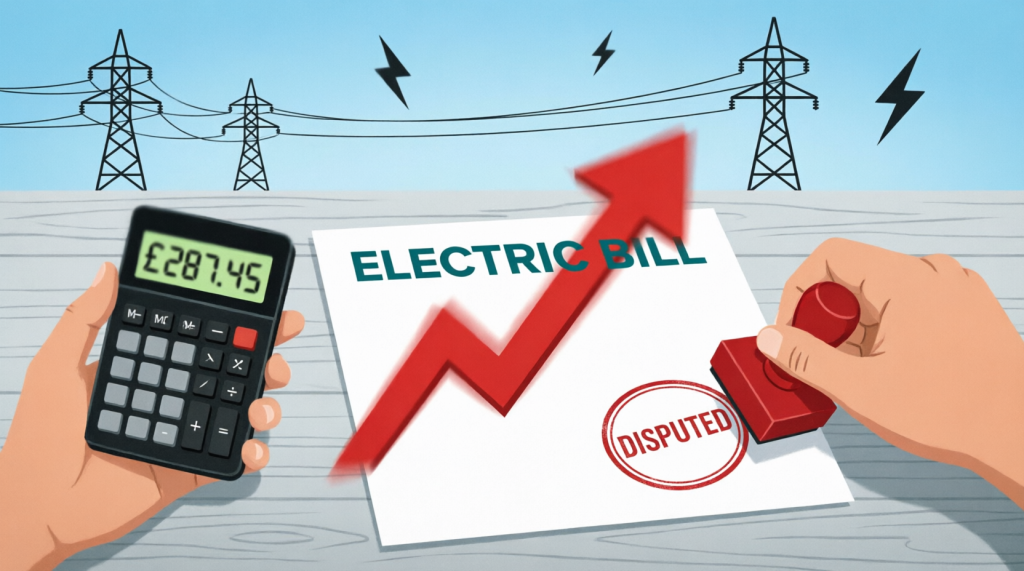
Receiving an electricity bill that seems impossibly high is one of the most stressful experiences a household or business can face. You open the envelope or the email, glance at the figure, and feel your stomach drop.
The amount is double, triple, or even quadruple what you expected. You know your usage has not changed, yet the supplier insists you owe them hundreds or even thousands of pounds. Click here to contact the paralegal at Impel Legal
If this has happened to you, you are not alone. Millions of UK consumers face billing disputes with their energy suppliers every year. The good news is that the law is heavily weighted in your favour, and there are clear, structured avenues to challenge an overcharged electricity bill, secure a refund, and in many cases claim compensation.
The Paralegal at Impel Legal specialises in helping consumers navigate these disputes, ensuring that energy suppliers are held to account and that your rights under UK law are fully enforced. Click here to contact the paralegal at Impel Legal.
WHAT IS AN OVERCHARGED ELECTRICITY BILL?
An overcharged electricity bill is any invoice that demands payment for more electricity than you actually consumed, at a rate you did not agree to, or for a period for which you cannot lawfully be billed. Overcharging can result from administrative errors, technical faults, negligent estimation practices, or in some cases, deliberate misapplication of tariff terms.
The Paralegal at Impel Legal can review your billing history, identify exactly where and how the overcharge occurred, and advise you on the strongest legal basis for your dispute. This initial assessment is often the difference between a supplier dismissing your complaint and a supplier being compelled to act.
COMMON WAYS UK ELECTRICITY BILLS ARE OVERCHARGED
Understanding how overcharging happens is the first step to fighting it. Below are the most frequent causes of inflated or inaccurate electricity bills in the United Kingdom.
- Inaccurate Estimated Readings
If your supplier has not received an actual meter reading, they are permitted to estimate your usage. However, estimates are often based on historical data that no longer reflects your circumstances. If you have recently installed solar panels, reduced your household size, started working from home less, or switched to more efficient appliances, the estimate may be wildly inflated.
Example: Mrs Patel in Birmingham had been receiving estimated bills for nine months after her smart meter stopped transmitting data. When a manual reading was finally taken, the supplier issued a bill for £2,400, claiming she had used nearly three times her actual consumption. The estimate had been based on the previous occupant, who ran an electric heating system, whereas Mrs Patel used gas central heating.
- Faulty or Inaccurate Meters
Meters can malfunction, degrade over time, or be incorrectly installed. A faulty meter may record usage that never occurred, or it may run fast, registering more kilowatt hours than are genuinely consumed.
Example: Mr Smith in Manchester noticed his bills had doubled despite no change in his routine. He requested a meter test under Section 37 of the Electricity Act 1989. The test revealed the meter was running 18 percent fast. He had been overcharged for fourteen months.
- Back Billing Beyond the Permitted Period
Under Ofgem’s back billing rules, introduced in 2018 and reinforced in subsequent guidance, energy suppliers cannot charge domestic customers for energy used more than 12 months ago if the supplier was responsible for the billing failure. For microbusinesses, the limit is also 12 months. If a supplier suddenly presents you with a bill covering two or three years of “missed” charges, that bill is likely unenforceable in full.
Example: A family in Leeds received a demand for £3,100 covering 26 months of alleged undercharging. Because the supplier had failed to issue accurate bills during that period and the family had not obstructed meter readings, the back billing beyond 12 months was unlawful.
- Wrong Tariff or Unit Rate Applied
Administrative errors can result in a customer being placed on the wrong tariff. You may be charged a standard variable rate when you signed up for a fixed-rate deal, or you may be charged a higher unit rate because of a data entry error.
Example: A small bakery in Bristol was charged the domestic standard tariff rate of 34 pence per kilowatt hour instead of their agreed commercial fixed rate of 21 pence per kilowatt hour for eight months, resulting in an overcharge of approximately £1,900 .
- Transposed or Incorrect Meter Readings
A simple but devastating error: a meter reader or automated system records 48,521 instead of 4,521. The supplier bills you for tens of thousands of units you never used.
Example: A pensioner in Glasgow received a bill for £4,700. The meter reader had transposed two digits. Her actual reading was 3,217, not 32,711. The supplier initially refused to accept her correction without a formal dispute process.
- Billing After a Switch
When you switch energy supplier, the old supplier should issue a final bill and the new supplier should take over. Errors in the switching process can result in both suppliers billing you for the same period, or the old supplier continuing to bill you for months after you left.
Example: A couple in Cardiff switched from Supplier A to Supplier B in March. Due to a data error, Supplier A continued to issue estimated bills until September, accumulating a phantom debt of £680.
- Incorrect Standing Charges or VAT
Standing charges are fixed daily or monthly fees. If a supplier applies the wrong standing charge, or applies VAT at the wrong rate (domestic electricity is charged at 5 percent VAT, not 20 percent), your bill will be inflated.
Example: A tenant in London discovered that his supplier had been applying a standing charge of 53 pence per day instead of the correct 46 pence per day for two years, adding over 50 pounds to his annual bill unnecessarily, compounded by the incorrect application of 20 percent VAT instead of 5 percent.
- Smart Meter Malfunctions
Smart meters are designed to eliminate estimation errors, but they can lose connectivity, record erroneous data, or fail to update tariff information after a switch. A smart meter displaying incorrect data can feed that data directly into your billing.
Example: A household in Nottingham received a bill for £900 for a single month. Their smart meter had recorded a cumulative reading rather than an incremental one, meaning they were billed for their total lifetime consumption in one billing cycle.
- Deemed Contract Charges
If you move into a property and do not actively choose a supplier, you are placed on a “deemed contract.” These contracts often carry significantly higher rates than standard tariffs. If the supplier fails to inform you clearly of the terms, you may be overcharged for months without realising it.
Example: A student in Sheffield moved into a rented flat and was placed on a deemed contract at 42 pence per kilowatt hour, nearly double the standard rate, for six months before she realised and switched.
- Green Levy and Policy Cost Errors
Occasionally, suppliers misapply government policy costs, such as the Energy Company Obligation or the Renewables Obligation, passing on incorrect amounts to consumers.
The Paralegal at Impel Legal can examine each of these scenarios against your specific billing records. Whether the issue is a transposed digit, a faulty meter, or an unlawful back billing demand, the Paralegal will identify the legal basis for your challenge and prepare the necessary correspondence or claim. Click here to contact the paralegal at Impel Legal.
YOUR LEGAL RIGHTS AS A UK CONSUMER
The United Kingdom has a robust framework of consumer protection legislation and regulatory oversight that governs energy billing. Understanding these rights is essential.
The Consumer Rights Act 2015
Under the Consumer Rights Act 2015, services must be provided with reasonable care and skill. Energy supply and billing are services. If your supplier has failed to bill you accurately, they have arguably failed to meet this standard. You are entitled to a price reduction or a repeat performance (a corrected bill).
The Electricity Act 1989
Section 37 of the Electricity Act 1989 gives you the right to request a meter test if you suspect your meter is inaccurate. The supplier must arrange this test. If the meter is found to be inaccurate by more than the permitted tolerance (plus or minus 2.5 percent for most domestic meters), the supplier must correct your bills for the period the meter was faulty.
Ofgem Regulations and Standards of Conduct
Ofgem, the energy regulator, enforces strict rules on suppliers. Key protections include:
The 12-month back billing rule: Suppliers cannot charge domestic consumers or microbusinesses for energy used more than 12 months before the corrective bill is issued, where the supplier was at fault for the delay.
Billing accuracy requirements: Suppliers must issue accurate bills based on actual readings wherever possible, and estimates must be reasonable.
Complaint handling: Suppliers must acknowledge complaints within set timeframes and provide a final response within eight weeks.
The right to a final bill on switching: Suppliers must issue a closing bill within six weeks of a switch.
Supply of Goods and Services Act 1982
This Act implies that services, including energy supply and billing administration, must be carried out with reasonable care and skill. A failure to do so gives rise to a claim for damages or a refund.
The Energy Ombudsman
If your complaint is not resolved by your supplier within eight weeks, or if the supplier issues a deadlock letter, you can escalate the matter to the Energy Ombudsman. The Ombudsman can order the supplier to refund overcharges, pay compensation of up to 500 pounds for distress and inconvenience, and correct future billing.
The Paralegal at Impel Legal ensures that every one of these legal protections is invoked correctly on your behalf. Rather than you navigating complex legislation alone, the Paralegal drafts complaints that cite the specific statutory provisions, Ofgem licence conditions, and regulatory guidance relevant to your case, dramatically increasing the likelihood of a swift resolution. Click here to contact the paralegal at Impel Legal.
SCENARIOS: HOW OVERCHARGING AFFECTS REAL CONSUMERS
Scenario One: The Estimated Bill Shock
David lives alone in a two-bedroom flat in Wolverhampton. He works full time and is out of the house for ten hours a day. His smart meter broke in January, and by August, he had received seven estimated bills. Each estimate was based on the assumption of a two-person household with electric heating. His cumulative estimated charges reached £1,850 When a manual reading was finally obtained, his actual usage entitled him to bills totalling just £620. David was overcharged by £1,230.
What David can do: He can demand an immediate correction and refund of the overpaid amount. Under Ofgem rules, the supplier must correct the account promptly. If the supplier refuses or delays, David can escalate to the Energy Ombudsman. He may also claim compensation for the stress and the time spent resolving the matter.
How the Paralegal at Impel Legal intervenes: The Paralegal can write a formal letter before action to the supplier, citing the Consumer Rights Act 2015 and Ofgem billing standards, demanding the refund within 14 days. If the supplier fails to comply, the Paralegal can prepare a complaint for the Energy Ombudsman or, if appropriate, issue proceedings in the Small Claims Court.
Scenario Two: The Faulty Meter
Sarah runs a small hair salon in Exeter. Over six months, her electricity bills rose from an average of £180 per month to over £400 per month. She changed nothing in her business. She requested a meter test. The test showed the meter was over-registering by 22 percent. She had been overcharged by approximately £790 pounds.
What Sarah can do: Under Section 37 of the Electricity Act 1989, the supplier must recalculate her bills for the period the meter was inaccurate and refund the difference. If the supplier disputes the period of inaccuracy, Sarah can request an independent assessment. As a microbusiness, she is also protected by Ofgem’s back billing rules and the Standards of Conduct for business customers.
How the Paralegal at Impel Legal intervenes: The Paralegal can ensure the meter test is conducted properly and that the results are documented. The Paralegal will calculate the correct refund amount, draft the formal demand, and negotiate with the supplier. If the supplier attempts to limit the refund period unfairly, the Paralegal will challenge this with reference to the relevant regulations. Click here to contact the paralegal at Impel Legal.
Scenario Three: The Unlawful Back Bill
Tom and Jenny moved into their home in Dundee in 2023. In 2026, they received a bill from their supplier for £2,800, claiming they had been undercharged for 30 months due to a billing system error. They had always paid their bills on time and had never obstructed a meter reading.
What Tom and Jenny can do: Under Ofgem’s back billing rules, because the error was the supplier’s fault and more than 12 months have passed, the supplier can only recover charges for the most recent 12 months. The remaining 18 months of charges are unrecoverable. Tom and Jenny should dispute the bill in writing, citing the back billing rule.
How the Paralegal at Impel Legal intervenes: The Paralegal will review the timeline, confirm that the back billing rule applies, and write to the supplier demanding the bill be reduced to the lawful 12-month amount. If the supplier threatens debt collection or disconnection, the Paralegal will intervene immediately to prevent unlawful enforcement action and can seek an injunction if necessary. Click here to contact the paralegal at Impel Legal.
Scenario Four: The Double Billing After a Switch
Amara switched from Supplier X to Supplier Y in April. Due to a data mismatch, Supplier X continued to send her estimated bills until October. Meanwhile, Supplier Y was billing her correctly. Amara received demands from Supplier X totalling £540 for energy she had already paid Supplier Y to provide.
What Amara can do: She should notify both suppliers of the error. Supplier X must cancel the erroneous bills. If they refuse, she can complain and escalate to the Energy Ombudsman. She should not pay the duplicate charges. If Supplier X passes the debt to a collection agency, she can dispute the debt formally and report the matter.
How the Paralegal at Impel Legal intervenes: The Paralegal will write to both suppliers to untangle the billing overlap, ensure Supplier X cancels the charges, and deal with any collection agency correspondence. If Amara’s credit rating has been affected by the erroneous debt, the Paralegal can seek corrective action and compensation. Click here to contact the paralegal at Impel Legal.
Scenario Five: The Deemed Contract Trap
Jake moved into a new rental property in Swansea. He assumed the electricity was included in the rent. Six months later, he received a bill from a supplier he had never heard of, charging him at a deemed contract rate of 45 pence per kilowatt hour, totalling £1,100. He had never agreed to this rate.
What Jake can do: While deemed contracts are lawful, suppliers must inform customers of the terms clearly. If Jake was not properly notified, he may have grounds to dispute the rate. He can also request a refund of the difference between the deemed rate and a reasonable market rate. He should switch to a standard tariff immediately.
How the Paralegal at Impel Legal intervenes: The Paralegal will assess whether the supplier met its notification obligations, negotiate a reduction in the charges, and assist Jake in switching to a fair tariff. If the supplier refuses to adjust the bill, the Paralegal will escalate the complaint through the appropriate channels. Click here to contact the paralegal at Impel Legal.
Scenario Six: The Smart Meter Data Error
Priya in Leicester received a single bill for £4,200. Her smart meter had recorded the cumulative total reading as the period consumption. Her actual usage for the billing period was equivalent to approximately £85. The supplier’s automated billing system had not flagged the anomaly.
What Priya can do: She should dispute the bill immediately and request a corrected bill based on actual consumption. The supplier is obligated to issue accurate bills. If the supplier insists on the erroneous figure, Priya can complain formally and escalate to the Ombudsman.
How the Paralegal at Impel Legal intervenes: The Paralegal will obtain the smart meter data logs, demonstrate the error clearly in a written submission to the supplier, and demand an immediate correction. The Paralegal will also seek compensation for the distress of receiving such a shocking bill and for any time Priya lost dealing with the matter. Click here to contact the paralegal at Impel Legal.
CAN YOU CLAIM A REFUND AND COMPENSATION?
Yes. In the vast majority of overcharging cases, you are entitled to a full refund of the overpaid amount. Beyond the refund, you may also be entitled to compensation in the following circumstances.
Compensation for distress and inconvenience: The Energy Ombudsman can award up to £500 pounds for the stress, anxiety, and time you spent resolving the dispute. In court proceedings, this amount can be higher depending on the circumstances.
Interest on overpaid amounts: You can claim interest on the money you overpaid, particularly if the supplier held your funds for an extended period.
Compensation for financial loss: If the overcharge caused you to miss other payments, incur overdraft fees, or suffer damage to your credit rating, you can claim for these consequential losses.
Compensation for poor complaint handling: If the supplier failed to respond within the required timeframes, provided misleading information, or treated you unfairly during the complaints process, additional compensation may be appropriate.
The Paralegal at Impel Legal will quantify your full losses, including the overcharge, interest, consequential losses, and compensation for distress, and include all of these in the claim. The Paralegal will ensure you are not short-changed by a supplier offering a token goodwill gesture when the law entitles you to more. Click here to contact the paralegal at Impel Legal.
THE DISPUTE PROCESS: STEP BY STEP
Step One: Gather Your Evidence
Collect all bills, correspondence, meter readings, smart meter data, and notes of phone calls. Note dates, names of representatives, and reference numbers.
Step Two: Contact Your Supplier
Raise the dispute with your supplier’s complaints department. Do this in writing (email or letter) so you have a record. State clearly what the error is, what the correct amount should be, and what resolution you seek. The supplier has eight weeks to provide a final response.
Step Three: Escalate to the Energy Ombudsman
If the supplier does not resolve the issue within eight weeks, or if you receive a deadlock letter, you can refer the matter to the Energy Ombudsman. This service is free to consumers. The Ombudsman’s decision is binding on the supplier.
Step Four: Report to Ofgem
If the supplier is in breach of its licence conditions or Ofgem’s Standards of Conduct, you can report the matter to Ofgem. While Ofgem does not resolve individual disputes, it can investigate systemic failures and impose fines.
Step Five: Legal Proceedings
For larger claims, or where the Ombudsman route is unsuitable, you may issue proceedings in the County Court. Claims up to £10,000 are typically handled in the Small Claims Track.
Step Six: Alternative Dispute Resolution
In some cases, mediation or another form of alternative dispute resolution may be appropriate to reach a settlement without court proceedings.
The Paralegal at Impel Legal can manage this entire process for you. From drafting the initial complaint letter to representing you before the Energy Ombudsman or preparing court documents, the Paralegal ensures that every step is handled professionally, promptly, and with full reference to your legal rights. You do not need to spend evenings on hold or writing letters. The Paralegal does this for you.
HOW THE PARALEGAL AT IMPEL LEGAL CAN HELP
The Paralegal at Impel Legal offers dedicated support to consumers and microbusinesses facing overcharged electricity bills. The services available include:
Initial case assessment: The Paralegal will review your bills, meter readings, and correspondence to identify the nature and extent of the overcharge. You will receive a clear, honest assessment of the strength of your case.
Formal complaint drafting: The Paralegal will draft a comprehensive complaint letter to your supplier, citing the specific legislation, Ofgem regulations, and licence conditions that the supplier has breached. This is not a generic template. It is tailored to your circumstances.
Negotiation with the supplier: The Paralegal will communicate directly with the supplier on your behalf, negotiating the refund, correction, and any compensation. This removes the stress and frustration of dealing with call centres and unhelpful representatives.
Energy Ombudsman referral: If the supplier fails to resolve the matter, the Paralegal will prepare and submit your case to the Energy Ombudsman, ensuring all evidence is presented clearly and all legal arguments are made.
Court proceedings: For larger claims or where other routes are unsuitable, the Paralegal will prepare and issue court proceedings, manage the litigation process, and represent your interests.
Debt collection defence: If a supplier has passed an erroneous debt to a collection agency, or is threatening disconnection, the Paralegal will intervene to protect you from unlawful enforcement action.
Credit rating correction: If an overcharge dispute has resulted in an adverse entry on your credit file, the Paralegal will seek to have this corrected.
Ongoing advice: The Paralegal will advise you on your rights throughout the process, keeping you informed at every stage and ensuring you understand your options.
Whether your overcharge is £200 or £5,000, the Paralegal at Impel Legal treats your case with the seriousness it deserves. Energy suppliers often rely on consumers not knowing their rights or not having the confidence to challenge a large corporation. The Paralegal at Impel Legal levels that playing field. Click here to contact the paralegal at Impel Legal.
WHAT TO DO RIGHT NOW IF YOU SUSPECT YOU HAVE BEEN OVERCHARGED
Do not ignore the bill, but do not pay a disputed amount without seeking advice first, as this can complicate your position. Note down your meter reading today and take a photograph. Gather your last twelve months of bills. Write down what you believe the error is. Then contact the Paralegal at Impel Legal for an initial assessment. Time can be a factor, particularly with back billing disputes, so acting promptly is important.
FINAL THOUGHTS
An overcharged electricity bill is not something you simply have to accept. The law in the United Kingdom provides extensive protection to consumers, and the regulatory framework enforced by Ofgem places strict obligations on suppliers. Whether your bill has been inflated by a faulty meter, a negligent estimate, a billing system error, or an unlawful back charge, you have the right to challenge it, receive a refund, and in many cases obtain compensation for the trouble caused.
The Paralegal at Impel Legal stands ready to guide you through every stage of this process, from the first letter to the final resolution. You do not have to fight a multi-billion-pound energy company alone.
Contact the Paralegal at Impel Legal today to discuss your overcharged electricity bill and find out how your rights can be enforced. Click here to contact the paralegal at Impel Legal.
DISCLAIMER
This article is provided for general information and educational purposes only. It does not constitute legal advice, nor does it create a solicitor-client or paralegal-client relationship. Every case is unique, and the information contained in this article may not apply to your specific circumstances. The law and regulatory guidance referenced in this article are accurate to the best of our knowledge at the time of writing but may be subject to change. You should seek independent legal advice tailored to your individual situation before taking any action or making any decision based on the content of this article. The Paralegal at Impel Legal and Impel Legal accept no liability for any loss, damage, or inconvenience arising from reliance on the information contained in this article. If you are in dispute with your energy supplier, we strongly recommend that you seek professional guidance specific to your case. Energy regulations, Ofgem guidance, and consumer protection legislation are updated periodically, and you should verify the current position before relying on any provision mentioned herein.
More reading.
- Inaccurate Billing & Overcharging:
Click here for gas or click here for electric.
Dispute massive, unexpected bill spikes or inaccurate estimation models using Energy Supplier Dispute Letters. - Withheld Account Credit Refunds: Fight back against energy firms holding thousands in built-up summer credit reserves
- Broken Smart Meters: Get malfunctioning home smart meters repaired or replaced safely