
Ripped off buying fake goods?
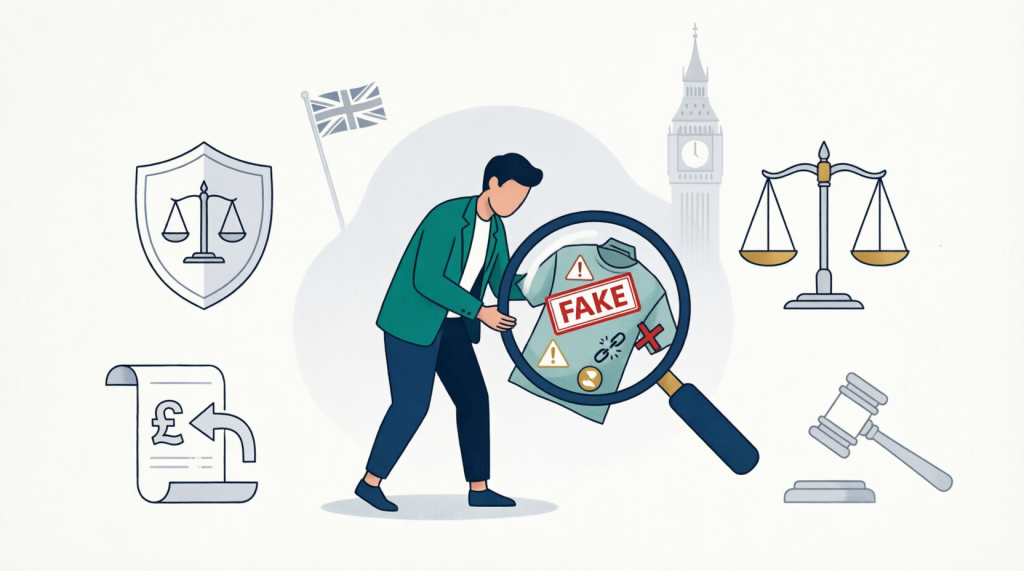
Welcome to The Paralegal at Impel Legal. Have you bought counterfeit goods or knockoffs? Deceptive products increasingly expose consumers in today’s digital marketplace. Finding out you have purchased counterfeit goods or knockoffs can be frustrating and potentially dangerous.
This article explains your rights. It clarifies the differences between these products and the available avenues to secure a refund. It also covers how to claim compensation under UK law. Click here to contact the Paralegal at Impel Legal.
SECTION 1: UNDERSTANDING THE DIFFERENCE WITH COMPREHENSIVE EXAMPLES
It is vital to understand the legal distinction between a counterfeit item and a knockoff.
Counterfeit goods are illegal. They are manufactured to deceive buyers into believing they are genuine branded products, directly infringing on registered trademarks. Examples of counterfeits include fake designer clothing bearing replicated logos.
Knockoffs, on the other hand, are generally legal. They mimic the style or design of a popular product without using the protected trademark or brand name. Examples of knockoffs include high street fashion brands producing dresses that look identical to a runway designer piece but without the designer label, generic smartphones that share the physical dimensions of leading models, or budget furniture that copies the exact shape of a famous mid-century modern chair.
Where the paralegal at Impel Legal can intervene: If you are unsure whether an item you purchased is an illegal counterfeit or a legal knockoff, the paralegal at Impel Legal can review the product details, packaging, and sales descriptions to determine if trademark infringement has occurred and advise on your immediate next steps.
SECTION 2: UK LEGAL RIGHTS AND CONSUMER PROTECTION
Under UK law, specifically the Consumer Rights Act 2015, any goods you purchase must be of satisfactory quality, fit for purpose, and as described. When a seller passes off a counterfeit as a genuine article, they breach the as described requirement. Furthermore, the Consumer Protection from Unfair Trading Regulations 2008 protects you from misleading actions and omissions by traders.
Protect your identity and request refunds for fake clothing, toys, or electronics via the consumer resources at GOV.UK Counterfeit Advice. This government resource provides essential guidance on spotting fakes and securing your personal data if you have handed over payment details to fraudulent sellers.
Where the paralegal at Impel Legal can intervene: Navigating government portals and understanding statutory rights can be daunting. The paralegal at Impel Legal can help you interpret the Consumer Rights Act 2015 as it applies to your specific purchase and guide you through the official GOV.UK Counterfeit Advice procedures to ensure your identity remains secure while you pursue a refund.
SECTION 3: SCENARIOS OF COUNTERFEITS, KNOCKOFFS, AND COMPENSATION CLAIMS
Can you claim compensation? Yes, if the counterfeit or misrepresented knockoff has caused you financial loss, property damage, or personal injury. If the item is simply not genuine but caused no harm, your primary remedy is a full refund.
Scenario A: The Counterfeit Electronic Device
You purchase what you believe to be a genuine branded laptop charger from an online marketplace. It turns out to be a counterfeit. Not only does it fail to charge your laptop, but a power surge fries your laptop motherboard. Because the item was counterfeit and unsafe, you can claim a refund for the charger and seek compensation for the damaged laptop under the Consumer Protection Act 1987.
Scenario B: The Misrepresented Knockoff Handbag
You buy a handbag online. The listing uses ambiguous language implying it is a luxury brand, but it is actually a knockoff. When it arrives, it has no branding and is made of poor materials. Because it was not as described, you are entitled to a full refund within thirty days of purchase under the Consumer Rights Act 2015.
Scenario C: Unsafe Fake Toys
You buy a set of building blocks for your child that mimic a famous brand. They are counterfeit and contain toxic lead paint, resulting in an allergic reaction. You can claim a refund for the toys and pursue compensation for medical expenses and distress.
Where the paralegal at Impel Legal can intervene: In all these scenarios, gathering the correct evidence is crucial. The paralegal at Impel Legal can assist in compiling your evidence, drafting formal letters of claim to the seller, and calculating the exact compensation you are legally entitled to pursue for both direct financial losses and consequential damages.
SECTION 4: AVENUES OPEN TO DEAL WITH THE ISSUES AND HOW TO CLAIM A REFUND
When you discover you have bought a fake, you have several avenues to secure your money back.
First, contact the seller directly. State clearly that the item is counterfeit or not as described and demand a full refund under the Consumer Rights Act 2015.
Second, if the seller refuses or disappears, contact your bank or credit card provider. If you paid by credit card and the item cost between one hundred pounds and thirty thousand pounds, you can make a Section 75 claim. For debit cards, you can request a chargeback.
Third, report the seller to Trading Standards via the Citizens Advice consumer helpline. While Trading Standards can investigate and prosecute the seller, they do not usually secure individual refunds, which is why parallel action with your bank is necessary.
Fourth, if the seller is a registered business and refuses to refund you, you can take the matter to the Small Claims Court.
Where the paralegal at Impel Legal can intervene: The paralegal at Impel Legal can manage this entire process on your behalf. They can draft robust Section 75 or chargeback dispute letters to your bank, liaise directly with stubborn sellers, and prepare all necessary documentation should your claim need to escalate to the Small Claims Court, ensuring you have the strongest possible case.
DISCLAIMER
The information provided in this article is for general educational purposes only and does not constitute formal legal advice. Every consumer dispute is unique, and legal outcomes depend on specific circumstances. You should always seek professional legal counsel regarding your specific situation. The Paralegal at Impel Legal provides paralegal services and support but does not act as a regulated solicitor unless otherwise specified.
Click here to contact the paralegal at Impel Legal
- Faulty Retail Goods: Claim a refund, replacement, or repair for products that are broken or fail within 30 days using the paralegal at Impel Legal.
- Counterfeit Goods & Knockoffs: Request refunds for fake clothing, toys, or electronics via the paralegal at Impel Legal.
- Item Mismatch (Not as Described): Return goods that do not look like or act like their product listing using information from the paralegal at Impel Legal.