
Broken Smart Meters: How to Get Malfunctioning Home Smart Meters Repaired or Replaced Safely
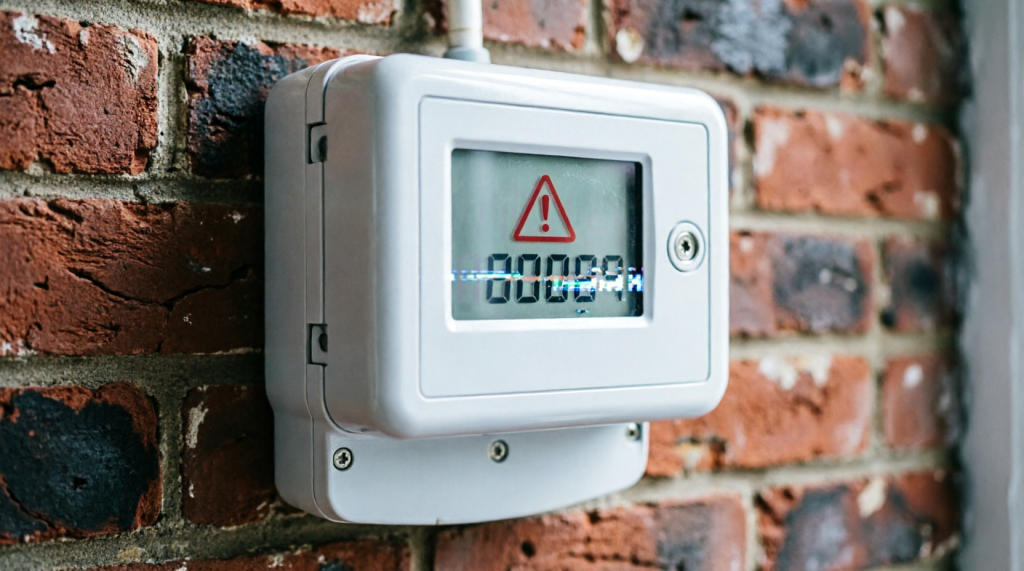
You can get your smart meter fixed or replaced. Smart meters were rolled out across the United Kingdom with the promise of accurate billing, real-time energy usage data, and an end to estimated readings.
Yet for thousands of households, that promise has turned into frustration. Meters freeze, lose connection to the supplier, display incorrect readings, or stop working entirely. When a smart meter malfunctions, the consequences can be more than an inconvenience.
They can lead to overcharging, undercharging, disputes with energy suppliers, and genuine anxiety about household finances.
This article explains what to do when your smart meter is broken, how UK electricity bills can be overcharged as a result of meter faults, what protections exist for consumers, and what avenues are open to you if you believe you have been treated unfairly. At every stage, The Paralegal at Impel Legal can intervene to protect your interests, draft correspondence, negotiate with suppliers, and guide you through the legal and regulatory framework that governs energy supply in England, Wales, and Scotland. Click here to contact the paralegal at Impel Legal.
Section One: What Counts as a Broken or Malfunctioning Smart Meter
A smart meter may be considered broken or malfunctioning in a number of ways. Common faults include:
The meter display goes blank or shows error codes that prevent the consumer from reading their usage. The meter loses its connection to the supplier’s network, meaning readings are not transmitted and the supplier reverts to estimates. The meter records consumption at a higher or lower rate than actual usage due to internal calibration failure. The meter repeatedly resets, losing historical data. The in-home display unit stops communicating with the meter. The meter registers phantom usage when all appliances in the home are switched off. The meter fails after a power cut or surge and does not recover. The smart functionality degrades and the meter reverts to a traditional meter without the consumer being informed.
Under the Electricity Act 1989 and the conditions of supply set out by Ofgem, the energy supplier is responsible for the installation, maintenance, and accuracy of the meter. The consumer does not own the meter. It is the supplier’s asset, and the supplier has a legal obligation to ensure it functions correctly.
If your meter is broken, the first step is to contact your energy supplier and report the fault. The supplier should arrange an inspection, typically within a reasonable timeframe. If the meter is genuinely faulty, the supplier must repair or replace it at no cost to the consumer. The consumer should never attempt to open, tamper with, or remove the meter themselves, as this is both dangerous and a criminal offence under the Theft Act 1968 and the Electricity Act 1989.
Where the supplier is unresponsive, dismissive, or refuses to attend, The Paralegal at Impel Legal can draft a formal complaint letter to the supplier citing their statutory obligations, set a deadline for action, and advise the consumer on escalating the matter to the Energy Ombudsman if the supplier fails to resolve the issue within eight weeks.
Section Two: How UK Electricity Bills Can Be Overcharged Due to Faulty Meters
Overcharging due to a malfunctioning smart meter can take several forms. Below are comprehensive examples drawn from common complaints and regulatory findings.
Example One: Calibration Drift
A smart meter’s internal sensors can drift over time, particularly in older SMETS1 meters. If the meter begins registering 1.15 kWh for every 1.00 kWh actually consumed, a household using 3,000 kWh per year will be billed for 3,450 kWh. At a unit rate of 34 pence per kWh, that is an overcharge of approximately 153 pounds per year, compounding if the fault goes undetected for multiple billing cycles.
Example Two: Phantom Consumption
A meter with a faulty current sensor may register a small but continuous load even when the property is empty or all circuits are off. A household that is away for two weeks may return to find they have been billed for 40 or 50 kWh of electricity they never used.
Example Three: Estimated Readings Replacing Actual Smart Readings
When a smart meter loses its communication link, the supplier may revert to estimated billing. If the estimate is based on a previous winter usage profile but applied to a summer month, the consumer may be billed significantly more than their actual consumption. The overcharge can run into hundreds of pounds before the discrepancy is noticed.
Example Four: Double Counting After a Meter Swap
In some cases, when a supplier installs a new smart meter, the final reading from the old meter and the opening reading from the new meter are not reconciled correctly. The consumer is billed for the same period of consumption twice, once under the old meter account and once under the new.
Example Five: Faulty In-Home Display Leading to Misunderstanding
While the in-home display unit is not the meter itself, if it shows inaccurate data, a consumer may fail to notice that the actual meter is over-recording. The consumer believes everything is functioning because the display appears active, delaying detection of the underlying meter fault.
Example Six: Time-of-Use Tariff Errors
For consumers on an Economy 7 or a dynamic time-of-use tariff, the smart meter must correctly assign consumption to peak and off-peak periods. A software fault can cause off-peak usage to be logged as peak usage, inflating the bill because peak unit rates can be double or triple the off-peak rate.
Example Seven: Standing Charge Applied Twice
In rare administrative errors linked to meter replacement or account migration, the daily standing charge may be applied to both the old and new meter accounts for an overlapping period, effectively doubling the fixed cost for several weeks.
In each of these scenarios, the consumer has the right to challenge the bill. The Paralegal at Impel Legal can review the billing history, identify the pattern of overcharge, calculate the financial loss, and prepare a structured complaint to the supplier demanding correction, a revised bill, and where appropriate, compensation for distress and inconvenience.
Section Three: Consumer Protections Under UK Law
Consumers in the United Kingdom are protected by a layered framework of legislation, regulation, and industry codes.
The Electricity Act 1989 places the duty of meter accuracy and maintenance on the supplier. Section 95 and Schedule 7 give meter examiners the power to test disputed meters.
The Consumer Rights Act 2015 requires that services, including energy supply and metering, be performed with reasonable care and skill. A faulty meter that leads to incorrect billing can constitute a failure to provide the service with reasonable care.
The Supply of Goods and Services Act 1982, as it applies to services, reinforces that the service must be carried out within a reasonable time and for a reasonable charge.
Ofgem’s Standards of Conduct, contained in the licence conditions of all supply licence holders, require suppliers to treat customers fairly, to bill accurately, and to resolve complaints promptly. Licence condition 27 specifically addresses complaints handling.
The Gas and Electricity (Consumer Complaints) Standards of Conduct Regulations 2004 require suppliers to acknowledge complaints within set timeframes and to issue a final response within eight weeks.
The Energy Ombudsman scheme, approved under the Alternative Dispute Resolution regulations, provides a free and binding adjudication service for consumers who remain dissatisfied after the supplier’s internal complaints process.
The Consumer Protection from Unfair Trading Regulations 2008 prohibit misleading actions and omissions by traders, which can extend to a supplier knowingly or negligently continuing to bill from a meter they ought to have known was faulty.
The Data Protection Act 2018 and UK GDPR may also be relevant where a smart meter’s communication failure means the consumer’s usage data is mishandled or shared inaccurately.
The Paralegal at Impel Legal is well versed in this regulatory landscape. Where a consumer is unsure which protection applies to their circumstances, The Paralegal at Impel Legal can assess the situation, identify the relevant statutory provisions, and frame the consumer’s complaint or claim in the language that compels the supplier to act. This is particularly important where a supplier’s first-line customer service team may not appreciate the legal weight of the consumer’s position. Click here to contact the paralegal at Impel Legal.
Section Four: Can the Consumer Claim a Refund and Compensation
The short answer is yes, but the route and the amount depend on the circumstances.
Refund of overpaid charges: If a meter is proven to have been over-recording, the supplier must recalculate the bills for the affected period and refund the difference. The consumer should not have to pay for electricity they did not consume. The refund should appear on the account as a credit or be paid directly into the consumer’s bank account.
Back-billing protection: Under Ofgem’s back-billing rules introduced in 2019, a supplier cannot chase a consumer for unpaid energy charges that relate to a period more than twelve months before the supplier identified the billing error. This protects consumers from receiving a sudden demand for thousands of pounds covering several years of alleged undercharging. Conversely, if the error led to overcharging, the consumer can claim back for the full period of the fault, not limited to twelve months.
Compensation for distress and inconvenience: If the supplier’s handling of the fault has caused the consumer significant stress, repeated phone calls, time off work, or financial hardship (for example, direct debits taken at an inflated amount causing an overdraft), the consumer can request compensation. The Energy Ombudsman has the power to award up to £ 10,000 in compensation, though most awards are modest, typically between £50 and £500 for inconvenience.
Interest on overpaid amounts: In principle, a consumer can argue that the supplier has held their money without justification and should pay interest. While not always awarded automatically, it can be requested, particularly for large overcharges spanning many months.
Guaranteed payments for supplier failures: Under Ofgem’s guaranteed standards, if a supplier fails to meet certain service obligations (for example, failing to respond to a complaint within the required timeframe), the consumer is entitled to a fixed payment, typically 30 pounds per failure.
Where the supplier refuses to refund, disputes the meter fault, or offers an inadequate settlement, The Paralegal at Impel Legal can prepare a detailed letter before action, compile evidence including meter readings, billing statements, and correspondence, and represent the consumer’s position to the Energy Ombudsman. If the matter escalates to the small claims track of the County Court, The Paralegal at Impel Legal can assist in drafting the claim form, the particulars of claim, and the witness statement, ensuring the consumer’s case is presented clearly and persuasively.
Section Five: Scenarios
Scenario One: The Frozen Display
Mrs Patel in Birmingham notices that her smart meter display has been showing the same reading for six weeks. She contacts her supplier, who tells her to wait for an engineer. No engineer arrives for nine weeks. During that time, she receives three estimated bills, each significantly higher than her actual usage would warrant. She is charged an additional £210 over the period. Mrs Patel contacts The Paralegal at Impel Legal, who writes to the supplier citing the breach of the complaints handling timeline under Ofgem licence conditions, demands an immediate meter inspection, a recalculation of all estimated bills, a refund of the £210 overcharge, and a guaranteed payment of £30 for the missed appointment. The supplier resolves the matter within fourteen days.
Scenario Two: The Over-Recording Meter
Mr Hughes in Cardiff suspects his electricity bill is too high. He switches off every appliance and circuit breaker in his home and observes that the smart meter continues to register consumption. He films the meter display as evidence. He contacts his supplier, who initially dismisses the concern. Mr Hughes engages The Paralegal at Impel Legal, who advises him to request a formal meter test under Schedule 7 of the Electricity Act 1989. The test confirms the meter is over-recording by eighteen percent. The Paralegal at Impel Legal calculates the overcharge across fourteen months of billing, totalling £487. and submits a formal demand for a full refund plus compensation for the initial dismissal of his complaint. The supplier refunds the full amount and adds £150 in compensation.
Scenario Three: The Double-Billed Tenant
Ms Okafor is a tenant in Manchester. Her landlord changes energy supplier midway through her tenancy. Due to an administrative error, the old supplier continues to bill her for three weeks after the new supplier has taken over. She pays both sets of direct debits, totalling an overcharge of £94. She contacts both suppliers but is passed between departments for two months. The Paralegal at Impel Legal intervenes, writing to both suppliers simultaneously, identifying the precise overlap period, and demanding the old supplier issue an immediate refund with a written apology. The matter is resolved within ten working days.
Scenario Four: The Economy 7 Software Fault
Mr and Mrs Thompson in Leeds are on an Economy 7 tariff. After a routine smart meter firmware update, their off-peak immersion heater usage begins to be logged as peak consumption. Their monthly bill jumps from approximately £95 to £162. They do not notice for four months. When they query the bill, the supplier attributes the increase to colder weather. Dissatisfied, they instruct The Paralegal at Impel Legal, who requests the half-hourly consumption data from the smart meter (which the supplier is obligated to provide under data access rules), identifies the tariff coding error, and demands recalculation of all four months of billing. The overcharge totals £268. The supplier refunds the amount and applies a £75 goodwill payment.
Scenario Five: The Disconnected Meter and Escalating Debt
Mrs Sinclair in Glasgow’s smart meter loses its connection to the supplier’s network. The supplier does not notify her and begins estimating her bills at a rate far above her actual usage. Over six months, her account accumulates an apparent debt of £640 . The supplier sends debt collection letters and threatens to install a prepayment meter. Mrs Sinclair is distressed and contacts The Paralegal at Impel Legal. The Paralegal immediately writes to the supplier placing a formal hold on any debt recovery action pending investigation, requests the meter be tested, and demands all estimated bills be suspended. Once the meter is reconnected and actual readings obtained, it emerges Mrs Sinclair owes nothing. The Paralegal at Impel Legal secures a written confirmation that the debt is cancelled, a removal of any adverse markers from her credit file, and £200 in compensation for the distress caused by the debt collection threats.
Section Six: Practical Steps for the Consumer
If you believe your smart meter is broken or your bill is wrong, the following steps will protect your position.
Do not tamper with the meter. Report the fault to your supplier in writing (email or letter) so there is a dated record. Take photographs or video of the meter display showing the fault. Record your own meter readings regularly, ideally weekly, and keep a log. Note all phone calls to the supplier, including the date, time, name of the representative, and what was said. Keep copies of all bills, both estimated and actual. If the supplier does not resolve the issue within eight weeks of your formal complaint, you are entitled to take the matter to the Energy Ombudsman. If the meter is dangerous (for example, showing signs of burning, arcing, or gas-related issues in a dual-fuel property), contact the supplier’s emergency line or the national emergency number immediately.
The Paralegal at Impel Legal can assist with every one of these steps, from drafting the initial fault report in language that triggers the supplier’s formal obligations, to compiling the evidence file, to managing the complaint through to Ombudsman stage or court if necessary. Click here to contact the paralegal at Impel Legal.
Section Seven: All Avenues Open to the Consumer
The consumer is not limited to a single route. The avenues available include:
Internal complaints procedure of the energy supplier. Every supplier must have one, and the consumer has the right to a final response within eight weeks.
The Energy Ombudsman. Free to the consumer. Decisions are binding on the supplier up to an award of 10,000 pounds. The consumer must usually have exhausted the supplier’s internal process first, or waited eight weeks without resolution.
Ofgem. The regulator can investigate systemic failures by a supplier, although it does not adjudicate individual billing disputes. However, a complaint to Ofgem can put pressure on a supplier that is repeatedly failing its customers.
The Citizens Advice consumer service. Can provide initial guidance and, in some cases, refer matters to enforcement bodies.
Alternative Dispute Resolution schemes. In addition to the Energy Ombudsman, some suppliers participate in other ADR schemes.
The County Court, small claims track. For claims up to £10,000, the consumer can issue a claim for overpaid charges, compensation, and any associated losses such as bank charges caused by excessive direct debits.
Trading Standards. In cases where a supplier’s conduct may amount to a breach of the Consumer Protection from Unfair Trading Regulations 2008, a report to Trading Standards can trigger enforcement action.
The Information Commissioner’s Office. If the smart meter fault involves misuse or inaccurate handling of the consumer’s personal data, a complaint can be made to the ICO.
The Paralegal at Impel Legal can advise on which avenue, or combination of avenues, is most appropriate for the consumer’s specific circumstances. The Paralegal can prepare and submit complaints to the Energy Ombudsman, draft court papers for the small claims track, write to Ofgem highlighting regulatory breaches, and liaise with Trading Standards where unfair trading practices are suspected. The consumer does not have to navigate these overlapping routes alone.
Section Eight: How The Paralegal at Impel Legal Can Help
The Paralegal at Impel Legal provides practical, accessible legal support to consumers dealing with faulty smart meters and disputed energy bills. The services include:
Reviewing the consumer’s billing history and meter data to identify overcharges, anomalies, and patterns of error. Drafting formal complaint letters and letters before action to energy suppliers, citing the relevant legislation, licence conditions, and regulatory standards. Calculating the precise financial loss suffered by the consumer, including overpaid unit charges, standing charges, and any consequential losses such as bank overdraft fees. Negotiating directly with the supplier’s complaints or legal team to secure a refund, bill correction, meter replacement, and compensation. Preparing submissions to the Energy Ombudsman, including drafting the narrative of events, compiling supporting evidence, and framing the remedy sought. Advising on and preparing documents for a small claims court action where the supplier refuses to resolve the matter. Advising on data protection rights where smart meter data has been handled incorrectly. Providing ongoing support throughout the process so the consumer is not left dealing with automated phone systems and generic responses. Offering a clear, jargon-free explanation of the consumer’s legal rights at every stage. Click here to contact the paralegal at Impel Legal.
The Paralegal at Impel Legal understands that energy disputes are stressful, particularly for vulnerable consumers, those on low incomes, or those with health conditions that make them dependent on electricity for heating or medical equipment. The approach is always proportionate, persistent, and focused on achieving the best practical outcome for the client.
If your smart meter is broken, if your bill does not reflect your actual usage, or if your supplier is failing to act, you do not have to accept the situation. The law is on your side, and The Paralegal at Impel Legal is here to make sure your supplier knows it. Click here to contact the paralegal at Impel Legal.
Disclaimer
This article is provided for general information and educational purposes only. It does not constitute legal advice and should not be relied upon as a substitute for obtaining specific legal guidance tailored to your individual circumstances. While every effort has been made to ensure the accuracy of the information contained in this article at the time of publication, laws, regulations, and regulatory guidance may change. The Paralegal at Impel Legal accepts no liability for any loss or damage arising from reliance on the contents of this article. If you are experiencing an issue with a faulty smart meter or a disputed energy bill, you are encouraged to seek personalised legal advice before taking any action. References to legislation, regulatory frameworks, and compensation limits are correct as at the date of publication and relate to the law of England, Wales, and Scotland unless otherwise stated. Energy supply arrangements in Northern Ireland are governed by separate regulatory structures. The Paralegal at Impel Legal is not a solicitor firm. The availability of specific remedies, including compensation amounts and time limits for claims, may vary depending on the facts of each case.
The Paralegal at Impel Legal. Protecting your rights, one reading at a time.
Click here to contact the paralegal at Impel Legal.
More reading.
- Inaccurate Billing & Overcharging:
Click here for gas or click here for electric.
Dispute massive, unexpected bill spikes or inaccurate estimation models using Energy Supplier Dispute Letters. - Withheld Account Credit Refunds: Fight back against energy firms holding thousands in built-up summer credit reserves
- Broken Smart Meters: Get malfunctioning home smart meters repaired or replaced safely
📅 Last updated: