
Can I take legal action against my hairdresser?
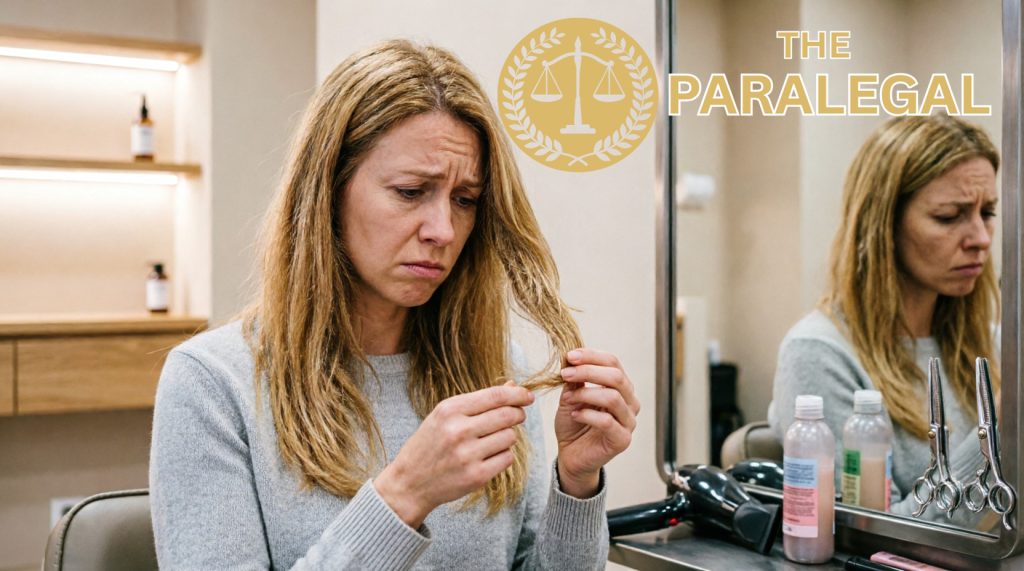
YES, you can take legal action against your hairdresser.
Before you consider suing your hairdresser, let’s take a look at the many options available to you and, hopefully, reach an amicable conclusion without the expense or ruining a relationship, with help from the paralegal at Impel Legal.
Let’s face it, you may have built a friendship with your hairdresser, and good hairdressers are hard to find despite unfortunate mistakes. Click here to contact the paralegal at Impel Legal.
A visit to a hairdresser should leave you feeling confident and satisfied. Unfortunately, mistakes can result in damaged hair, chemical burns, scalp injuries, an unwanted style or unexpected charges. In more serious cases, a salon’s actions may cause infection, permanent hair loss, financial loss or psychological harm.
Hairdressing is a service for the purposes of the Consumer Rights Act 2015. A salon, mobile hairdresser or self-employed stylist must perform that service with reasonable care and skill. If they fail to do so, you may be entitled to corrective treatment, a price reduction, a refund or compensation, depending on what happened and the evidence available.
The Paralegal at Impel Legal can assess what went wrong, identify the potentially relevant legal rights and remedies, help preserve evidence, prepare a formal complaint and assist with negotiations with the salon or its insurer. Click here to contact the paralegal at Impel Legal.
What are your legal rights when using a hairdresser?
Under section 49 of the Consumer Rights Act 2015, a hairdresser must provide their service with reasonable care and skill. This broadly means meeting the standard that could reasonably be expected from a competent hairdresser carrying out that type of treatment.
The Act also provides that:
- Information given orally or in writing about the hairdresser or service may become binding if you relied on it when making your decision.
- If no price was agreed in advance, you should only have to pay a reasonable price.
- If no completion time was agreed, the service must be provided within a reasonable time.
- A salon cannot simply use its terms and conditions to exclude responsibility for failing to exercise reasonable care and skill.
The law does not guarantee that every customer will like the final appearance. A disappointing result is not automatically negligence or a breach of contract. The important question is whether the hairdresser followed the agreed instructions and worked to a reasonably competent standard.
The Paralegal at Impel Legal can compare what was agreed with what was delivered, review photographs and communications, and help determine whether the complaint is a matter of personal preference or evidence of a legally actionable failure. Click here to contact the paralegal at Impel Legal.
When can you complain about a haircut?
You may have grounds to complain if the stylist:
- Cut substantially more hair than you authorised.
- Gave you a different style from the one agreed.
- Created visibly uneven sections, bald patches or avoidable steps.
- Used clippers, razors or scissors carelessly.
- Ignored clear instructions about length, layers, fringe or texture.
- Claimed to have specialist experience that they did not possess.
- Failed to explain that your requested style was unsuitable or could not realistically be achieved.
For example, you ask for a 2 cm trim and show the stylist where you want the hair to finish. The stylist removes 15 cm without obtaining your agreement. Because hair cannot immediately be restored, repeat performance may be impossible. A price reduction, potentially up to a full refund, may therefore be more appropriate than another haircut.
However, if you asked the stylist to use their discretion and simply dislike the result, a claim may be more difficult unless the work was objectively below a reasonable standard.
The Paralegal at Impel Legal can help establish the instructions given, obtain supporting evidence and calculate an appropriate refund or compensation request. Click here to contact the paralegal at Impel Legal.
Hair colouring and bleaching complaints
Colouring and bleaching are common sources of hairdresser complaints. Possible reasons to complain include:
- The colour is materially different from what was agreed.
- Bleach is left on for too long.
- The stylist uses an unsuitable product or strength.
- The colour is patchy, banded or uneven.
- Hair becomes severely dry, brittle or breaks off.
- The stylist overlaps bleach onto already damaged hair without proper assessment.
- The salon fails to consider information about previous colouring, allergies or chemical treatments.
- The stylist promises a result that was not realistically achievable in one appointment.
- The salon fails to warn you about material risks or necessary maintenance.
- A product is used contrary to its instructions.
A poor colour result does not automatically prove negligence. The condition of the hair before treatment, the information supplied during the consultation, the agreed outcome and the steps taken by the stylist will all be relevant.
Consider a customer who explains that their hair has previously been bleached and is fragile. The stylist proceeds with a strong lightening treatment without adequately assessing the hair. Large sections then break away. The customer may seek a refund and potentially the reasonable cost of restorative treatment, replacement hair products, specialist assessment or temporary hairpieces. If there is a physical injury or medically recognised psychological injury, additional compensation may be considered.
The Paralegal at Impel Legal can examine consultation records, product information, photographs and treatment history, and can put the allegations and claimed losses to the salon or its insurer. Click here to contact the paralegal at Impel Legal.
Chemical burns, allergic reactions and scalp injuries
Chemical treatments can cause burns, blistering, swelling, dermatitis, scarring and hair loss. Complaints may arise where the hairdresser:
- Fails to follow the product manufacturer’s instructions.
- Uses excessive quantities or an excessive product strength.
- Leaves chemicals on for too long.
- Ignores complaints of burning, pain or unusual heat.
- Applies chemicals to broken, irritated or unsuitable skin.
- Fails to undertake or properly consider an allergy-alert test where one is required by the product instructions or appropriate professional practice.
- Continues treatment after signs of an adverse reaction appear.
- Fails to rinse or neutralise a chemical product correctly.
- Mixes products incorrectly.
- Fails to ask relevant questions about allergies, medication or previous reactions.
There is no universal rule that every hairdressing treatment must always be preceded by a patch test. The product instructions, the type of treatment and the circumstances matter. Nevertheless, a failure to follow relevant safety instructions or respond appropriately to a known risk can be important evidence of a lack of reasonable care.
For example, a customer tells a stylist that their scalp is burning during a bleach treatment. The stylist says this is normal and leaves the bleach in place. The customer later requires medical treatment for burns. The claim may include the service price, treatment costs, travel expenses, lost earnings and compensation for the injury, pain and any resulting scarring or hair loss.
The Paralegal at Impel Legal can help secure medical evidence, request the salon’s treatment and incident records, prepare a schedule of financial losses and communicate with the salon’s public liability insurer. Click here to contact the paralegal at Impel Legal.
Cuts, burns and other physical injuries
A complaint may also be justified if a customer suffers:
- Cuts from scissors, razors or clippers.
- Burns from straighteners, curling irons, hairdryers or heated equipment.
- Scalp abrasions caused by rough brushing or combing.
- Eye injuries caused by shampoo, dye or other chemicals.
- Neck or back injuries associated with defective or poorly adjusted washing facilities.
- Slips or falls caused by wet floors, loose hair, cables or unsafe furniture.
- Infection associated with contaminated or inadequately cleaned equipment.
The salon may be liable in negligence if it owed the customer a duty of care, breached that duty and caused reasonably foreseeable injury. Depending on the circumstances, the Occupiers’ Liability Act 1957 may also be relevant to unsafe salon premises.
For example, a customer slips on an untreated pool of water beside the washing area and fractures their wrist. Evidence about cleaning systems, warning signs, CCTV, witnesses and previous incidents may be important.
The Paralegal at Impel Legal can obtain an account of the incident, identify possible defendants, request records, organise supporting evidence and assist with referring a personal injury claim for appropriate legal representation where required. Click here to contact the paralegal at Impel Legal.
Hair loss, breakage and permanent damage
Excessive heat, pulling, chemicals or poorly fitted extensions can lead to thinning, breakage, traction alopecia or permanent hair loss. Complaints may involve:
- Extensions fitted too tightly or applied to unsuitable hair.
- Excessive tension during braiding or styling.
- Repeated heat application without reasonable precautions.
- Chemical products applied to already compromised hair.
- Failure to stop when hair begins breaking.
- Removal of extensions in a way that causes avoidable damage.
- Failure to give appropriate aftercare information.
For example, extensions are fitted so tightly that the customer experiences persistent pain. The salon dismisses the complaint, and the customer later receives a diagnosis of traction alopecia. A potential claim may include the original price, corrective or removal costs, medical expenses, hair replacement costs, lost earnings and compensation for the injury.
The Paralegal at Impel Legal can help document the progression of the damage, obtain relevant records and receipts, and present the claim to the salon or insurer. Click here to contact the paralegal at Impel Legal.
Hygiene, infection and unsafe practices
Salons should use reasonably safe and hygienic working practices. Reasons to complain may include:
- Reusing visibly contaminated tools.
- Failing to clean equipment between customers.
- Using dirty towels or capes.
- Applying products from contaminated containers.
- Using expired or improperly stored products.
- Treating a customer despite an obvious infection risk.
- Causing a wound and failing to respond hygienically.
- Failing to maintain safe premises.
Not every infection occurring after a salon visit will have been caused by the salon. Medical evidence and the timing and nature of symptoms may be needed to establish causation.
The Paralegal at Impel Legal can help prepare a detailed chronology, identify supporting medical and photographic evidence and make appropriate enquiries of the salon.
Damaged clothing and personal belongings
Hair dye, bleach, chemicals or hot equipment can damage clothing, jewellery, handbags, hearing aids or other possessions. A salon may be responsible where the damage resulted from a failure to take reasonable precautions.
For example, a stylist fails to fasten a protective cape correctly and permanent dye ruins a customer’s £180 coat. The customer may seek the reasonable repair cost or the item’s value immediately before the damage. Compensation is not necessarily calculated using the full new replacement price if the item was already used.
The Paralegal at Impel Legal can help prove ownership, condition and value through receipts, photographs, valuations and comparable replacement evidence. Click here to contact the paralegal at Impel Legal.
Unexpected prices, hidden charges and misleading statements
A customer may complain if a salon:
- Charges more than the agreed price without authorisation.
- Adds treatments or products without explaining that they cost extra.
- Advertises one price but charges another.
- Conceals mandatory booking fees or surcharges.
- Falsely claims that a stylist has particular qualifications or experience.
- Misrepresents the brand or type of product being used.
- Makes unrealistic guarantees to secure the booking.
- Pressures a customer into purchasing unwanted treatments or products.
Under sections 50 and 51 of the Consumer Rights Act 2015, information relied upon by the consumer may form part of the contract, and where no price was fixed, only a reasonable price is payable. Part 4 of the Digital Markets, Competition and Consumers Act 2024 also prohibits unfair commercial practices, including misleading actions, misleading omissions and aggressive practices.
For example, a salon advertises a complete colour treatment for £90 but demands £145 after completion because toner and drying were supposedly “extras” that were never disclosed. The customer may dispute the undisclosed charges.
The Paralegal at Impel Legal can review the booking page, price list, messages, and receipt, challenge any hidden or misleading charges, and seek an appropriate refund. Click here to contact the paralegal at Impel Legal.
Deposits, cancellations and missed appointments
A salon can usually impose reasonable booking and cancellation terms, but those terms must be fair and transparent. A term allowing the salon to retain a disproportionately large deposit regardless of its actual loss may be challengeable under Part 2 of the Consumer Rights Act 2015.
Relevant complaints may include:
- The salon cancels but refuses to return the deposit.
- A booking fee was not disclosed before payment.
- The salon changes the stylist, service, location or date without agreement.
- The cancellation charge is disproportionate.
- The consumer is required to pay for services the salon never provided.
- The salon relies on a cancellation term that was not brought to the customer’s attention.
If a service is booked online, by telephone or away from the salon’s premises, the Consumer Contracts Regulations 2013 may provide a 14-day cancellation period. There are exceptions and a consumer may have to pay for services started during that period if they expressly requested early performance.
The Paralegal at Impel Legal can review the booking terms, assess whether a deduction is proportionate and pursue the return of an unfairly retained deposit.
Discrimination, harassment and accessibility complaints
In Great Britain, section 29 of the Equality Act 2010 generally prohibits service providers from discriminating against, harassing or victimising customers because of protected characteristics. These include age, disability, gender reassignment, marriage or civil partnership in the relevant context, pregnancy or maternity, race, religion or belief, sex and sexual orientation.
Examples may include:
- Refusing a customer because of their race or religion.
- Charging a disabled customer more without lawful justification.
- Making humiliating comments connected with a protected characteristic.
- Refusing reasonable adjustments for a disabled customer.
- Treating a transgender customer less favourably.
- Refusing service because a customer is pregnant without a genuine safety-based reason.
- Applying a policy that places a protected group at a particular disadvantage without objective justification.
The legislation does not necessarily require every hairdresser to offer every specialist hair service. The precise reason for the treatment and whether a comparable service was available will matter.
The Paralegal at Impel Legal can record the discriminatory conduct, identify witnesses and documents, help draft a formal grievance and assess options for settlement or referral for specialist representation. Click here to contact the paralegal at Impel Legal.
Unauthorised photographs and misuse of personal information
A salon may want to photograph a hairstyle for its portfolio or social media. Where a customer is identifiable, the image is likely to be personal data. Commercial use must comply with the UK GDPR and the Data Protection Act 2018, including the requirements for a lawful basis, fairness and transparency.
Complaints may arise where:
- A salon posts an identifiable photograph without proper authority or another lawful basis.
- An image is used for a purpose different from the one explained.
- A salon refuses to address a valid objection or withdrawal of consent.
- Personal or medical information supplied during a consultation is disclosed.
- The salon sends marketing messages without complying with applicable privacy rules.
Consent is not the only possible lawful basis, but where a salon relies on consent, it must meet the required standard. The Information Commissioner explains that consent must be freely given, specific, informed and indicated through affirmative action in its data-protection guidance.
The Paralegal at Impel Legal can help request removal of an image, make a data-protection complaint and organise evidence for escalation to the Information Commissioner’s Office or other appropriate action. Click here to contact the paralegal at Impel Legal.
Can you ask the salon to repair the problem?
For services, the statutory term is “repeat performance” rather than repair. Under section 55 of the Consumer Rights Act 2015, a consumer can require the trader to perform the service again to the extent necessary to put matters right.
Repeat performance must be:
- Completed within a reasonable time.
- Provided without significant inconvenience.
- Carried out at the salon’s cost.
Examples include reapplying an uneven colour, correcting a badly shaped fringe or properly refitting extensions. You should consider whether it is safe and sensible to let the original salon try again. If further chemical treatment could worsen the damage or you have reasonably lost confidence following an injury, repeat performance may be impossible or cause significant inconvenience.
The Paralegal at Impel Legal can help propose safe corrective action, set a reasonable deadline and explain why repeat performance is inappropriate where that is supported by the circumstances. Click here to contact the paralegal at Impel Legal.
Can you claim a refund?
A refund is not automatically available simply because you dislike the result. Under section 56 of the Consumer Rights Act 2015, you may be entitled to a price reduction where repeat performance is impossible or cannot be completed within a reasonable time and without significant inconvenience. The reduction can be up to 100% of the price.
A full refund may be reasonable where the service provided no meaningful benefit and cannot be corrected. A partial refund may be more appropriate where some of the service was satisfactory.
Once the salon agrees that a price reduction is due, it should provide the refund without undue delay and within 14 days, using the original payment method unless you expressly agree otherwise.
The Paralegal at Impel Legal can calculate and justify the requested reduction, prepare a letter before action and negotiate with the salon. Click here to contact the paralegal at Impel Legal.
Can you claim compensation?
Compensation may be available in addition to, or instead of, a refund where the salon’s breach or negligence caused further loss. Depending on the facts, a claim might include:
- Reasonable corrective treatment costs.
- Medical, prescription or therapy expenses.
- Travel expenses.
- Proven loss of earnings.
- Damage to clothing or belongings.
- Reasonable hairpieces, extensions or specialist products.
- Pain, suffering and loss of amenity caused by physical injury.
- Scarring or temporary or permanent hair loss.
- A medically recognised psychological injury.
- Other reasonably foreseeable losses caused by the breach.
Compensation is not intended to create a profit. The consumer must prove the loss, show that it was caused by the salon and take reasonable steps to avoid unnecessarily increasing it. Embarrassment or disappointment alone will not usually produce a substantial compensation award in an ordinary contract claim.
For example, a customer pays £160 for bleaching that causes hair breakage. A specialist charges £220 for reasonable restorative treatment, and the customer loses £120 in earnings while attending a medical appointment. Subject to proof and causation, the claim could include those amounts as well as any appropriate compensation for a physical injury.
The Paralegal at Impel Legal can prepare a schedule of loss, organise receipts and medical material, and negotiate a proportionate settlement with the salon or insurer. Click here to contact the paralegal at Impel Legal.
What evidence should you collect?
Strong evidence can make a significant difference. You should retain:
- Photographs taken before, immediately after and during recovery.
- Booking confirmations, consultation forms and patch-test records.
- Messages, emails and social-media communications.
- Screenshots of advertisements, portfolios and price lists.
- The receipt and proof of payment.
- Details of the products used, if known.
- The names of the stylist and any witnesses.
- A written chronology of what was said and done.
- Damaged hair, extensions or clothing where practical.
- Medical records and photographs of injuries.
- Receipts for treatment, travel, products and replacement items.
- Evidence of lost earnings.
- An independent hairdresser’s written opinion where appropriate.
Seek medical assistance promptly for burns, swelling, breathing problems, infection, eye exposure or significant hair loss. Your health should take priority over the complaint.
Avoid arranging major corrective work before giving the salon a reasonable opportunity to inspect the result, unless treatment is urgently needed or returning would be unsafe. Continue taking photographs before and after any correction.
The Paralegal at Impel Legal can identify evidential gaps, prepare a chronology and evidence bundle, and obtain appropriate supporting information before the condition changes. Click here to contact the paralegal at Impel Legal.
How to complain to a hairdresser
Start by contacting the salon promptly. Explain:
- What service you booked.
- What result or standard was agreed.
- What went wrong.
- When you first noticed the problem.
- Whether you suffered injury or additional expense.
- What remedy you want.
- When you expect a response.
Keep the complaint factual and avoid exaggeration. Attach photographs and relevant receipts. If you complain verbally, follow up in writing.
If the salon proposes corrective work, ask what it intends to do, who will perform it and whether further treatment presents a risk. Do not accept a voucher or settlement described as “full and final” unless you understand the consequences.
The Paralegal at Impel Legal can draft the initial complaint or a more formal letter before action, set out the legal basis of the claim and propose a clear resolution. Click here to contact the paralegal at Impel Legal.
What if the salon refuses to resolve the complaint?
If direct negotiation fails, possible next steps include:
- Using any trade-association or alternative dispute-resolution scheme available to the salon.
- Asking the salon to notify its insurer.
- Making a chargeback request to your card provider, where applicable.
- Making a section 75 claim against a credit-card provider where the legal requirements are met and the cash price of the service is more than £100 and no more than £30,000.
- Reporting unfair trading concerns through the Citizens Advice consumer service for possible referral to Trading Standards.
- Complaining to the Information Commissioner’s Office about a data-protection issue.
- Sending a formal letter before action.
- Starting an appropriate civil claim if settlement cannot be achieved.
Court proceedings should usually be a last resort. The likely value of the claim, legal costs, evidence, enforcement prospects and applicable procedural rules should all be considered first.
The Paralegal at Impel Legal can correspond with the salon, insurer or card provider, explore settlement and help prepare the matter for referral to a solicitor or other authorised representative if court proceedings or reserved legal activities become necessary. Click here to contact the paralegal at Impel Legal.
Time limits for hairdresser claims
Do not delay. In England and Wales, a straightforward breach-of-contract claim is generally subject to a six-year limitation period under the Limitation Act 1980. A personal injury claim is generally subject to a three-year period running from the date of injury or the date of knowledge, although exceptions can apply.
Different limitation and procedural rules apply in Scotland and Northern Ireland. Complaints involving discrimination or data protection may also have different and sometimes much shorter time limits. It is sensible to obtain advice as soon as possible.
The Paralegal at Impel Legal can help identify the likely category of claim, record important dates and arrange an urgent referral where a limitation deadline may be approaching. Click here to contact the paralegal at Impel Legal.
How The Paralegal at Impel Legal can help
A hairdresser complaint can involve contract law, consumer protection, negligence, personal injury, discrimination or data protection. The correct remedy will depend on the service promised, the seriousness of the mistake, whether the problem can safely be corrected and what losses can be proved.
The Paralegal at Impel Legal can assist by:
- Reviewing the facts and available evidence.
- Identifying potentially relevant consumer rights.
- Preparing a clear chronology.
- Drafting complaints and letters before action.
- Calculating refunds and financial losses.
- Communicating with the salon or insurer.
- Negotiating proposals for corrective treatment, refunds or compensation.
- Helping prepare documents for alternative dispute resolution.
- Referring the matter for specialist or authorised legal representation where appropriate.
Early intervention can help preserve evidence, focus the complaint and improve the prospect of achieving a practical resolution. Click here to contact the paralegal at Impel Legal.
Disclaimer
This article provides general information about consumer rights and hairdresser complaints and does not constitute legal advice. Rights and remedies depend on the individual facts, evidence, contractual terms and the legal jurisdiction involved. The discussion primarily reflects the law of England and Wales as at the date of publication; different rules may apply in Scotland and Northern Ireland. No outcome, refund or compensation award can be guaranteed. Consumers facing an injury, substantial financial loss, discrimination, a data-protection issue or an approaching deadline should obtain advice tailored to their circumstances. Click here to contact the paralegal at Impel Legal.