
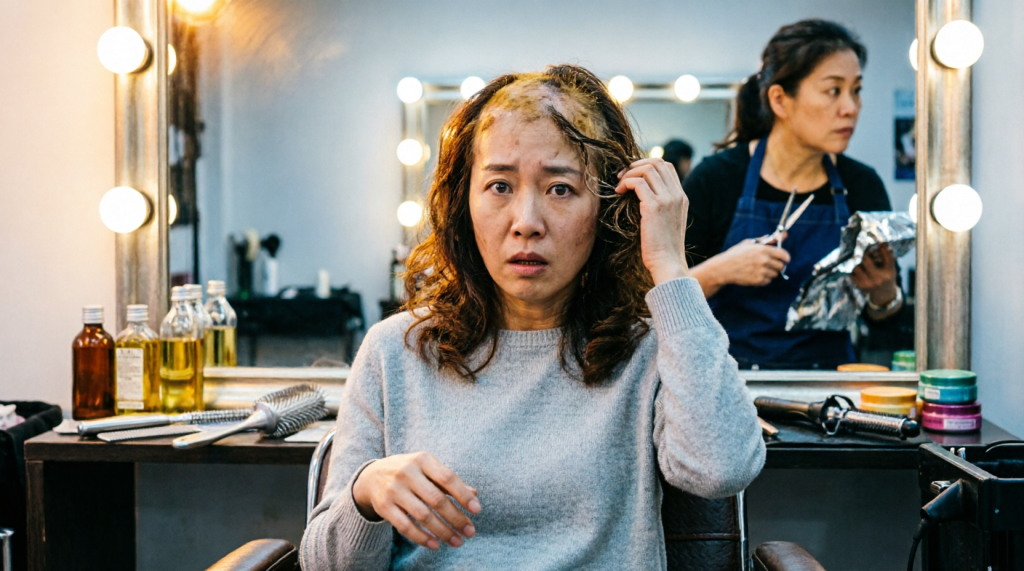
Can I actually sue my hairdresser?
The short answer is yes, you can sue your hairdresser or barber. In the United Kingdom, the law protects you when a service fails to meet the standard you are legally entitled to receive.
The longer answer, and the one that matters when your confidence, your health, or your livelihood has been affected, is what we are here to unpack. Click here to contact the paralegal at Impel Legal.
You sit in the hairdresser’s or barber’s chair, trust the process, and walk out with something unrecognisable—or worse, walk out in pain. Your scalp is blistering. Your hair is breaking off in clumps. Your skin is raw. And when you turn back to the person holding the scissors or the foil, they shrug, look away, or say the words every wronged customer dreads: “That’s just how it turned out.”
You paid for a service. You trusted a professional. And something has gone seriously, sometimes dangerously, wrong.
Your Legal Rights at the Hairdressers:
Before we look at specific examples, it is important to understand the statutes and regulations that govern your visit to any hair salon, barbershop, or mobile hairdressing service in England, Wales, Scotland, and Northern Ireland.
The Consumer Rights Act 2015
This is the cornerstone of your protection. Under Section 49, any service provided to a consumer must be carried out with reasonable care and skill. Under Section 50, any information the trader gives you (verbally or in writing) about the service forms part of the contract if you rely on it. Section 51 requires the price to be reasonable where it has not been fixed in advance, and Section 52 requires the service to be performed within a reasonable time.
If a hairdresser or barber breaches any of these statutory terms, you have a right to a repeat performance, a price reduction, or—in serious cases—a full refund and compensation for losses. The paralegal at Impel Legal can help.
The Supply of Goods and Services Act 1982 (Residual Application)
While largely superseded by the Consumer Rights Act 2015 for consumer contracts, this Act still informs certain business-to-business disputes and older contractual interpretations regarding implied terms of care and skill.
The Health and Safety at Work etc. Act 1974
Salons and barbershops are workplaces, but they also owe a duty of care to members of the public who enter their premises. Under Section 3, employers and self-employed persons must ensure, so far as is reasonably practicable, that persons not in their employment (i.e., you, the client) are not exposed to risks to their health or safety.
The Occupiers’ Liability Act 1957
The person in control of the salon premises owes a common duty of care to all lawful visitors. Wet floors, trailing cables, poorly maintained chairs, and unsterilised tools all fall within this duty.
The Consumer Protection from Unfair Trading Regulations 2008 (CPRs)
If a hairdresser or barber misleads you—about the products used, the qualifications they hold, the likely outcome of a treatment, or the aftercare required—they may be committing a criminal offence under these Regulations. Misleading actions and omissions are prohibited. Aggressive sales tactics (pressuring you into a more expensive treatment, for example) are also outlawed.
The Equality Act 2010
If you are refused service, charged more, or treated less favourably because of a protected characteristic (race, disability, sex, religion, sexual orientation, age, gender reassignment, pregnancy/maternity), you may have a discrimination claim in addition to any consumer claim.
Common Law Negligence
Independent of any statute, every professional owes a duty of care to their client. If that duty is breached and you suffer foreseeable harm—physical injury, psychological distress, financial loss—you may bring a claim in the tort of negligence.
The Criminal Law
In extreme cases, reckless or grossly negligent conduct causing serious injury could engage the Offences Against the Person Act 1861 (Sections 20 or 47), and Trading Standards may pursue prosecution under consumer protection legislation.
Five Acts by a Hairdresser or Barber That Could Give You the Right to Sue
Not every bad haircut is actionable. The law distinguishes between a subjective disagreement over style and an objective failure of professional duty. The following are examples where the threshold for legal action is typically met:
1. Chemical Burns and Scalp Damage from Improper Use of Products
Applying bleach, relaxer, perm solution, or hair dye at incorrect strengths, leaving it on for too long, failing to monitor the processing, or applying it to already compromised hair can cause chemical burns, blistering, scarring, and permanent hair loss (chemical alopecia). This is a clear breach of Section 49 of the Consumer Rights Act 2015 (reasonable care and skill) and may constitute negligence. If the product was defective, the Consumer Protection Act 1987 (strict product liability) may also be engaged against the manufacturer.
2. Failure to Conduct a Mandatory Patch Test
Most reputable colour manufacturers require a patch test 48 hours before application. Skipping this step—or performing it improperly—can result in severe allergic contact dermatitis, anaphylaxis, or chemical burns. The omission breaches the standard of care expected of a competent colourist and may violate the Health and Safety at Work etc. Act 1974 as well as the manufacturer’s instructions, which form part of the professional standard.
3. Performing a Treatment Without Informed Consent or Against Express Instructions
You asked for a trim; they took four inches off. You said no bleach; they bleached. You explicitly stated you were pregnant and wished to avoid certain chemicals; they proceeded regardless. Performing a service materially different from what was agreed, or ignoring a client’s stated contraindications, constitutes a breach of contract under the Consumer Rights Act 2015 and may amount to battery (a civil tort involving unwanted physical contact) in extreme circumstances.
4. Use of Unsterilised, Defective, or Dangerous Equipment
A barber using a contaminated razor that transmits a blood-borne infection (hepatitis, staphylococcus, MRSA), a stylist using a GHD straightener with a damaged plate that burns the scalp, or a salon using clippers that pull and tear because they have not been maintained—these are breaches of the Occupiers’ Liability Act 1957, the Health and Safety at Work etc. Act 1974, and the common law duty of care. Infections contracted in this way can lead to significant personal injury claims.
5. Misrepresentation of Qualifications, Products, or Expected Results
A stylist claims to be a “master colourist” with advanced certification when they completed a weekend course. They promise a platinum blonde result in one session on dark, previously coloured hair—a result any competent professional would know is impossible without severe damage. They use a cheap, unbranded product while telling you it is a premium range. These acts may breach the Consumer Protection from Unfair Trading Regulations 2008, constitute misrepresentation (giving rise to rescission of contract and damages), and violate Sections 49–50 of the Consumer Rights Act 2015.
Five Scenarios: Poor Results, Denial, and Excuses
The injury is one thing. The gaslighting is another. Many clients tell us that the emotional harm of being dismissed, lied to, or blamed after a damaging experience compounds the physical damage tenfold. Here are five scenarios we have seen—or variations of which cross our desks regularly.
Scenario 1: The Bleach Disaster
What happened: Priya, 29, booked a full-head platinum blonde transformation at a city-centre salon. The stylist applied a 40-volume developer bleach directly to her previously colour-treated hair, left it on for over an hour, and applied a second round without a strand test. Priya felt burning but was told, “It’s just tingling; that’s normal.” By the time the product was rinsed, her hair was breaking at the mid-lengths and her scalp was red, weeping, and blistered.
The denial: When Priya returned the following day, distressed and in pain, the salon manager refused to see her. The stylist sent a text: “Your hair was already damaged from box dye. There’s nothing we could have done differently. You should use a deep-conditioning mask.” No apology. No refund. No offer to pay for medical treatment.
Laws potentially breached: Consumer Rights Act 2015 (ss. 49, 50); common law negligence; Health and Safety at Work etc. Act 1974 (s. 3); Consumer Protection from Unfair Trading Regulations 2008 (misleading aftercare advice to avoid liability).
Scenario 2: The Skipped Patch Test
What happened: Marcus, 42, visited a barber for a beard-dye touch-up before his wedding. The barber applied the dye without performing a patch test or asking about allergies. Within three hours, Marcus’s jaw, neck, and cheeks were swollen, blistered, and oozing. He spent two days in A&E being treated for severe allergic contact dermatitis and was prescribed oral steroids.
The denial: The barber’s response, delivered by a receptionist over the phone, was: “You must have used the wrong aftershave or a new pillowcase. It’s not the dye. We’ve never had a problem before.” The appointment record showed no patch test was logged. When Marcus requested CCTV or product batch records, he was told the footage had “already been overwritten.”
Laws potentially breached: Consumer Rights Act 2015 (s. 49 – failure to exercise reasonable care and skill); Health and Safety at Work etc. Act 1974; common law negligence; potential breach of the manufacturer’s safety instructions (relevant to standard of care). The refusal to provide records may also engage data subject access rights under the UK GDPR / Data Protection Act 2018.
Scenario 3: The Scalding
What happened: Elaine, 58, went for a keratin straightening treatment. The stylist used a flat iron at an excessively high temperature and held it against Elaine’s temple and the nape of her neck for too long. Elaine yelped. The stylist pulled the iron away, leaving two visible, angry burns.
The denial: The stylist immediately said, “You jerked your head. I told you to hold still.” Elaine had not moved; she had been gripping the armrests. The salon owner later claimed Elaine’s skin was “unusually sensitive” and that the burns would “probably just be a mark for a day.” They offered a free blow-dry as compensation. The burns required wound-care nursing for three weeks and left permanent hypopigmented scars.
Laws potentially breached: Consumer Rights Act 2015 (s. 49); Occupiers’ Liability Act 1957 (unsafe equipment/technique); common law negligence; potentially the Offences Against the Person Act 1861 (s. 47 – assault occasioning actual bodily harm) if recklessness can be demonstrated. Blaming the client for their own injury may also amount to a misleading omission under the Consumer Protection from Unfair Trading Regulations 2008.
Scenario 4: The Wedding Hair Catastrophe
What happened: Sophie, 31, paid £350 for an elaborate updo for her wedding day. She attended a trial six weeks prior, which was perfect. On the morning of the wedding, the stylist arrived 40 minutes late, appeared flustered, and produced a style that bore no resemblance to the trial—loose, collapsing, and held together with so many pins they were visible in photographs. When Sophie expressed concern, the stylist said, “It’ll be fine once it settles.” It did not settle. The updo collapsed during the ceremony. Sophie’s photographer had to work around her repeatedly fixing her hair.
The denial: The salon’s owner told Sophie the humidity was to blame and that she should have booked an “extra-hold package” (which had never been mentioned). They refused a refund, claiming the service had been “delivered as contracted.” They suggested Sophie was “overreacting” and that the photographs “didn’t look that bad.” They later removed the trial images from their Instagram portfolio.
Laws potentially breached: Consumer Rights Act 2015 (ss. 49, 50, 52 – the service did not match the trial/description, was not performed with reasonable skill, and the late arrival breached the reasonable-time requirement); Consumer Protection from Unfair Trading Regulations 2008 (misleading omissions regarding the “extra-hold package”); breach of contract. The deletion of trial evidence may be relevant to any subsequent litigation (spoliation of evidence).
Scenario 5: The Barber’s Razor Burn and Infection
What happened: Daniel, 24, went to a new barbershop for a skin fade and hot-towel shave. The barber used a straight razor that visibly had residue on the blade and did not change the blade between clients. Two days later, Daniel’s neck and jawline erupted in painful, pus-filled folliculitis. He developed a staphylococcal infection requiring a course of antibiotics and a week off work.
The denial: The barber insisted Daniel had “touched his face with dirty hands” after the appointment and had not followed aftercare instructions—aftercare instructions that had never been given verbally or in writing. When Daniel asked to see the shop’s hygiene log and blade-change records, the owner became aggressive and told him to “stop making trouble or we’ll ban you.” No apology was offered. The shop’s online reviews showed two other customers reporting similar infections in the preceding month.
Laws potentially breached: Consumer Rights Act 2015 (s. 49); Health and Safety at Work etc. Act 1974 (ss. 2, 3); Occupiers’ Liability Act 1957; common law negligence; local authority hygiene regulations enforced by Environmental Health. The aggressive dismissal and refusal to provide records may engage the Consumer Protection from Unfair Trading Regulations 2008 (aggressive commercial practices). If the blade was not changed, this could also be relevant to potential criminal negligence.
What Can You Do? Your Avenues for Redress
If you recognise yourself in any of the scenarios above—or in something similar—know that you are not without options. UK law provides multiple, often overlapping, routes to hold a hairdresser or barber accountable.
1. Raise a Formal Complaint with the Salon or Barber
Put your complaint in writing (email or letter, so you have a record). State clearly what happened, what the result was, what you were told, and what you want (refund, compensation, contribution to medical costs, corrective treatment elsewhere). Give them 14 days to respond. This is often a prerequisite before escalating.
2. Report to Trading Standards / Your Local Authority
If the salon has breached consumer protection regulations, used unsafe products, or engaged in misleading or aggressive practices, you can report them to Trading Standards via the Citizens Advice consumer helpline (0808 223 1133) or your local council’s Trading Standards office. Environmental Health can investigate hygiene and safety breaches.
3. Report to the Health and Safety Executive (HSE) or Local Authority
For serious injuries caused by unsafe equipment, chemicals, or premises, a report to the HSE or your local authority’s environmental health department may trigger an inspection and enforcement action.
4. Use an Alternative Dispute Resolution (ADR) Scheme
Some salons belong to trade bodies such as the National Hairdressers’ Federation (NHF) or the British Hairdressing Council (BHC), which operate complaints or arbitration procedures. If the trader is signed up to an ADR scheme, you may be able to resolve the dispute without going to court.
5. Make a Claim Through the Courts
If the salon refuses to engage, you can issue a claim:
- Small Claims Track (up to £10,000): Suitable for refunds, the cost of corrective treatment, and modest injury compensation. You can issue via the Money Claims Online (MCOL) service or by filing an N1 claim form at your local County Court.
- Fast Track (£10,000–£25,000) or Multi-Track (over £25,000): For more serious personal injury claims involving scarring, permanent hair loss, psychological harm, or loss of earnings.
- Personal Injury Claims: If you have suffered a recognised psychiatric injury (e.g., severe anxiety, PTSD-like symptoms following a disfiguring incident) in addition to physical harm, this can be included. You generally have three years from the date of injury (or the date of knowledge) to issue proceedings under the Limitation Act 1980.
6. Report to the Police (in Extreme Cases)
If the conduct was reckless, intentionally harmful, or resulted in serious injury, you may wish to report the matter to the police. Offences under the Offences Against the Person Act 1861 or fraud/misrepresentation offences may be relevant.
7. Leave an Honest Review and Warn Others
While not a legal remedy in itself, leaving a factual, measured review on Google, Trustpilot, or social media can pressure the business to respond and can warn future clients. Be careful to state facts rather than opinions to avoid defamation complications.
8. Contact Your GP and Keep Medical Records
If you have suffered burns, allergic reactions, infections, or hair loss, see your GP or attend A&E promptly. Ensure the incident is documented in your medical notes. Photographs (dated and timestamped) of the damage are critical evidence.
9. Seek Legal Advice Early
A solicitor or paralegal experienced in consumer disputes and personal injury can assess the strength of your claim, calculate your losses (including future corrective treatment, loss of earnings, and injury-to-feelings awards), and handle correspondence so you do not have to face the salon alone. The paralegal at Impel Legal can help
Where the Paralegal at Impel Legal Can Help
At Impel Legal, our paralegal team understands that a “hairdresser claim” is never really just about hair. It is about the trust you placed in a professional, the pain you are in, the event you missed, the confidence that was stripped away while someone else shrugged and said, “It’s not our fault.” Contact the paralegal at Impel Legal – CLICK HERE.
Here is how we can assist:
- Free initial case assessment. Send us the facts—what happened, what was said, what the damage is—and we will give you an honest, jargon-free view of whether you have a viable claim and which legal avenues are open to you.
- Evidence gathering and preservation. We will help you compile photographs, appointment records, product information, medical reports, witness statements, and correspondence. Where a salon is deleting records or CCTV, we can advise on urgent steps to preserve evidence.
- Formal letters of claim. We draft robust, legally grounded letters of claim citing the specific statutory provisions breached (Consumer Rights Act 2015, Health and Safety at Work etc. Act 1974, Occupiers’ Liability Act 1957, Consumer Protection from Unfair Trading Regulations 2008, common law negligence) and setting out your losses. Many disputes resolve at this stage once the trader realises you are represented and informed.
- Negotiation and settlement. We handle all communication with the salon, their insurers, or their legal representatives, so you do not have to relive the experience in every phone call. We negotiate for a full refund, compensation for injury, corrective treatment costs, loss of earnings, and an acknowledgment of fault.
- Court preparation and support. If the matter proceeds to the Small Claims Track or beyond, we prepare your bundle, witness statements, and schedule of losses. We guide you through each stage of the process and can attend hearings with you for support.
- Signposting to specialist counsel. For high-value personal injury claims, complex medical evidence, or cases involving disfigurement and psychological harm, we work alongside experienced solicitors and barristers to ensure you have the right level of representation.
- Complaints to regulators and enforcement bodies. We can draft and submit reports to Trading Standards, the HSE, Environmental Health, and relevant trade bodies on your behalf, ensuring the incident is formally logged and investigated.
- Ongoing support and advice. We understand these cases are personal. You will have a consistent point of contact who knows your file, answers your calls, and keeps you updated without you having to chase.
Practical Steps to Take Right Now
If you have recently had a bad experience and are reading this in the immediate aftermath:
- Photograph everything. The damage to your hair, scalp, skin. The state of the salon if relevant. Timestamp the images.
- Seek medical attention if you have burns, swelling, infection, or hair loss. Keep all receipts and medical notes.
- Write down your account while it is fresh: the date, time, who performed the service, what was agreed, what happened, what was said afterwards, and who was present.
- Preserve any products used on you (ask for the product name, brand, and batch number). If they refuse, note the refusal.
- Keep all receipts, booking confirmations, texts, emails, and social media messages. Do not delete anything.
- Do not accept a verbal “sorry” as resolution if you have suffered genuine harm. Get any offer in writing.
- Contact Impel Legal for a confidential, no-obligation discussion before signing any waiver or accepting a token gesture.
Final Thoughts
The relationship between a client and their hairdresser or barber is one of trust. You hand over your appearance, your comfort, and sometimes your health to someone wielding chemicals, blades, and heat inches from your skin. That trust carries with it a legal duty—a duty codified in statute and reinforced by the common law.
When that duty is breached, and when the professional who caused the harm refuses to own it, blames you, lies, or simply disappears behind a locked door and an unanswered phone, the law does not expect you to shrug and walk away. It gives you rights. It gives you remedies. And it gives you the right to be heard.
You do not have to accept “That’s just how it turned out.”
You do not have to accept “Your hair was already damaged.”
You do not have to accept the silence, the excuses, or the blame.
You can sue. And you do not have to do it alone.
The Paralegal at Impel Legal
Impel Legal – Accessible. Practical. On Your Side.
Contact us today for a free, confidential case assessment. Contact the paralegal at Impel Legal – CLICK HERE.
This article is for general information purposes only and does not constitute legal advice. The law referenced is that of England and Wales unless otherwise stated. If you are in Scotland or Northern Ireland, some provisions differ; please contact us for jurisdiction-specific guidance. Time limits apply to all claims—do not delay in seeking advice.
© Impel Legal. All rights reserved.
You are not alone. Faulty sofas and upholstered furniture are among the most common consumer complaints in the UK. Whether it is a collapsing frame, torn leather, a ripped seam, sagging cushions, or a recliner that refuses to recline, the law is firmly on your side.