
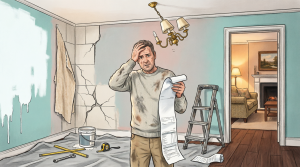
Home improvements should improve your life, not destroy your home, your budget and your peace of mind. Yet many homeowners and tenants in the UK find themselves dealing with tradespeople who carry out extremely poor-quality work, create mess and damage, perform unauthorised “extra” work, and then present a vastly increased bill.
If this has happened to you, you are not powerless. UK consumer law gives you important rights, and there are several routes you can use to challenge bad workmanship, unauthorised charges, property damage and aggressive trading behaviour.
This article explains your legal rights, the laws that may have been broken, five common examples of home improvement disputes, and how The Paralegal at Impel Legal can help you take practical action.
This article is for general information only and does not constitute legal advice. The position may vary depending on whether you are in England, Wales, Scotland or Northern Ireland.
Your core legal rights when paying for home improvements
When you hire a tradesperson to carry out work on your home, you are usually entering into a contract for services. If you are a consumer, your contract is protected by several key pieces of UK law.
- Consumer Rights Act 2015
The Consumer Rights Act 2015 is the main law protecting consumers who pay for services.
Under the Act, a trader must provide services:
– with reasonable care and skill;
– in line with information provided to you, if you relied on that information when deciding to hire them;
– for a reasonable price, where no fixed price was agreed;
– within a reasonable time, where no specific timescale was agreed.
If the work is poor, incomplete, unsafe, untidy, not as described, or not carried out to the standard expected of a competent tradesperson, the trader may be in breach of contract.
Your remedies can include:
– requiring the trader to carry out repeat performance;
– requiring the trader to fix defects within a reasonable time;
– claiming a price reduction, which in serious cases can be up to the full amount paid;
– claiming compensation for losses caused by the breach, such as repair costs, damage to property, alternative accommodation in serious cases, or the cost of putting the work right.
- Consumer Contracts Regulations 2013
The Consumer Contracts Regulations 2013 can apply where a contract is made at a distance, online, by phone, or away from the trader’s normal business premises, such as when a tradesperson comes to your home and you sign a contract there.
These regulations may give you rights relating to:
– clear pre-contract information;
– cancellation rights in some circumstances;
– protection against unauthorised additional payments;
– restrictions on hidden charges.
If a trader carries out extra work and tries to charge you for it without your clear agreement, this can be a serious issue.
- Consumer Protection from Unfair Trading Regulations 2008
The Consumer Protection from Unfair Trading Regulations 2008 prohibit misleading actions, misleading omissions and aggressive commercial practices.
A trader may be acting unlawfully if they:
– lie about the work needed;
– create a false sense of urgency;
– claim qualifications they do not have;
– exaggerate defects to increase the bill;
– pressure you into agreeing to extra work;
– use intimidation to demand payment;
– fail to disclose important information before you agree to the contract.
These regulations are enforced by Trading Standards, but they can also support your civil claim.
- Consumer Protection (Amendment) Regulations 2014
The Consumer Protection (Amendment) Regulations 2014 can give consumers a right to redress where they have been affected by misleading or aggressive trading practices.
This may include rights to:
– unwind the contract;
– receive a discount;
– claim damages for certain losses.
- Building Act 1984 and Building Regulations
Some home improvement work must comply with building regulations. This can include certain structural work, drainage work, electrical work, insulation, fire safety matters and other specified building work.
In England and Wales, relevant legislation includes the Building Act 1984 and the Building Regulations 2010. Similar building-control rules apply in Scotland and Northern Ireland.
If a trader carries out work that does not comply with building regulations, this can create safety risks and may also give rise to enforcement action by the local authority.
- Gas and electrical safety laws
Certain work must only be carried out by qualified and registered professionals.
For gas work, the Gas Safety (Installation and Use) Regulations 1998 require gas work to be carried out by a Gas Safe registered engineer.
Electrical work in homes may need to comply with building regulations, including electrical safety requirements. If a trader falsely claims to be qualified, certified or registered, this may also amount to misrepresentation or fraud.
- Fraud Act 2006
If a trader dishonestly misrepresents the position to obtain money, the Fraud Act 2006 may be relevant.
Examples include:
– falsely claiming that urgent work is needed;
– pretending to be registered or certified;
– inventing extra work;
– charging for work that was never done;
– demanding payment for unauthorised work;
– submitting a grossly inflated invoice.
Not every poor job is fraud, but dishonesty can turn a civil dispute into a criminal matter.
- Criminal Damage Act 1971
If a trader deliberately or recklessly damages your property, the Criminal Damage Act 1971 may be relevant.
Most bad workmanship is dealt with as a civil breach of contract, but intentional or reckless damage can be a criminal matter.
- Environmental Protection Act 1990
If a trader leaves waste behind, dumps materials, or fly-tips building waste, the Environmental Protection Act 1990 may be relevant.
Tradespeople have duties regarding the proper disposal of waste. Homeowners should also take reasonable steps to ensure waste is removed by legitimate carriers, so it is sensible to ask how waste will be disposed of and keep records.
- Consumer Credit Act 1974
If you paid by credit card, you may have additional rights under section 75 of the Consumer Credit Act 1974.
For qualifying purchases, the credit card provider may be jointly liable with the trader if the service was not provided properly or was misrepresented.
Debit card payments may also sometimes be challenged through your bank’s chargeback scheme, depending on the circumstances and time limits.
Five examples of poor-quality home improvement disputes
Below are five examples of common disputes involving tradespeople. Each scenario involves poor-quality work, unauthorised work, mess or damage, and a vastly increased bill.
These examples show how different laws may apply depending on the trade and the facts.
Example 1: The kitchen fitter who created chaos and doubled the bill
The scenario
A homeowner hires a kitchen fitter to remove an old kitchen and install a new one. The agreed price is £9,500. The work is expected to take two weeks.
The kitchen fitter arrives, removes the old kitchen, and then says the walls are “not straight” and the flooring is “unsafe”. Without written agreement, the fitter carries out extra plastering, cuts into floorboards, alters plumbing, removes part of a wall and claims that additional structural work was needed.
The work is extremely poor. Cabinets are uneven, worktops are badly cut, plaster is cracked, flooring is damaged, and rubble is left in the garden and hallway. There is dust throughout the property and damage to nearby doors and skirting boards.
The homeowner then receives a revised invoice for £19,750, including unauthorised “project management”, “urgent structural work” and “additional materials”.
Legal issues that may arise
This type of dispute may involve breaches of:
– Consumer Rights Act 2015 – the work may not have been carried out with reasonable care and skill, may not have been completed within a reasonable time, and may not match the information given before the contract.
– Consumer Contracts Regulations 2013 – extra payments may have been charged without proper agreement.
– Consumer Protection from Unfair Trading Regulations 2008 – the trader may have misled the consumer about the need for extra work.
– Building Act 1984 and Building Regulations – if structural alterations were carried out without proper approval or compliance.
– Fraud Act 2006 – if the trader dishonestly invented work, exaggerated defects or falsely claimed that urgent structural work was required.
Example 2: The electrician who left unsafe wiring and charged for unauthorised work
The scenario
A homeowner hires an electrician to replace sockets, install new lighting and carry out a partial rewire. The quoted price is £4,800.
The electrician leaves exposed wiring in several rooms, creates scorch marks around sockets, fails to test the system properly and replaces the consumer unit without prior agreement. The homeowner later discovers that no satisfactory electrical certificate has been provided and that the work may not have been notified to the relevant building control scheme.
The electrician then sends an invoice for £11,200, claiming that the consumer unit had to be replaced, additional circuits were needed and several “urgent safety issues” were found.
Legal issues that may arise
This type of dispute may involve breaches of:
– Consumer Rights Act 2015 – electrical work must be carried out with reasonable care and skill.
– Consumer Contracts Regulations 2013 – unauthorised replacement of the consumer unit and extra charges may not be enforceable if proper agreement was not obtained.
– Consumer Protection from Unfair Trading Regulations 2008 – false claims about urgent safety defects may amount to misleading or aggressive practices.
– Building Regulations – certain electrical work in homes may be notifiable or require certification.
– Fraud Act 2006 – if the electrician falsely claimed qualifications, invented urgent faults, or charged for work not carried out.
If electrical work is unsafe, it should be assessed urgently by a competent professional. Do not ignore signs of dangerous wiring, burning, tripping or exposed cables.
Example 3: The plumber who caused leaks, water damage and an inflated bill
The scenario
A homeowner hires a plumber to install a new bathroom. The agreed estimate is £7,000.
The plumber removes the old bathroom, installs the new suite, and then claims that emergency pipe replacement was required. The homeowner did not authorise this additional work.
Soon afterwards, the homeowner notices a leak under the floor, poor water pressure, incorrectly fitted waste pipes, damaged tiles, water stains on the ceiling below and a strong damp smell. The plumber left tools, old fittings, packaging and wet debris around the property.
The plumber then invoices £15,500, including “emergency plumbing”, “additional waste systems”, “new pipework” and “damage rectification”.
Legal issues that may arise
This type of dispute may involve breaches of:
– Consumer Rights Act 2015 – the plumbing work may not have been carried out with reasonable care and skill.
– Consumer Contracts Regulations 2013 – the plumber may have charged for extra work without proper consent.
– Consumer Protection from Unfair Trading Regulations 2008 – claiming an emergency existed when it did not may be misleading.
– Water Supply (Water Fittings) Regulations 1999 – plumbing work must be carried out properly to prevent waste, misuse or contamination of water.
– Fraud Act 2006 – if the plumber dishonestly claimed there was an emergency or inflated the bill.
– Negligence and breach of contract – the homeowner may claim for the cost of repairing water damage caused by poor workmanship.
Example 4: The roofer who turned a small repair into an unauthorised roof replacement
The scenario
A homeowner hires a roofer to repair a small area of damaged roof tiles. The quoted price is £4,200.
The roofer arrives and says the roof is in a far worse condition than expected. Without written agreement, the roofer removes a large section of the roof, strips tiles, damages fascia boards and guttering, and leaves the property exposed to rain.
Rain enters the loft and damages ceilings and insulation. The garden is left with broken tiles, old felt, rubble and packaging. The roofer then demands £13,900 for what he describes as a “partial full roof replacement” and “urgent weatherproofing”.
Legal issues that may arise
This type of dispute may involve breaches of:
– Consumer Rights Act 2015 – the work may not have been carried out with reasonable care and skill.
– Consumer Contracts Regulations 2013 – unauthorised extra work and additional charges may not be binding.
– Consumer Protection from Unfair Trading Regulations 2008 – exaggerating the condition of the roof or creating false urgency may be unlawful.
– Building Regulations – if the work affected structural elements, insulation or other regulated matters.
– Environmental Protection Act 1990 – improper disposal of roof waste may raise waste duty-of-care issues.
– Criminal Damage Act 1971 – if damage was caused deliberately or recklessly.
– Fraud Act 2006 – if the roofer dishonestly claimed that a much larger job was necessary.
Roofing disputes are common because the homeowner cannot easily see the full condition of the roof. This makes independent inspection and photographic evidence especially important.
Example 5: The decorator and damp-proofer who created mess, damage and hidden extras
The scenario
A homeowner hires a decorator to repaint several rooms and treat a small area of damp. The agreed price is £5,000.
The decorator arrives and says the damp is much worse than expected. He carries out unauthorised damp-proofing injections, replasters large areas, removes wallpaper, sands walls without proper dust protection and paints over surfaces that were not properly prepared.
The result is extremely poor. Paint is splashed on carpets, windows, doors and floorboards. Plaster is uneven, damp patches remain, and the property is left covered in dust and debris. Some waste is reportedly dumped nearby rather than disposed of properly.
The decorator then invoices £10,800, including “emergency damp treatment”, “full replastering”, “surface preparation” and “specialist materials”.
Legal issues that may arise
This type of dispute may involve breaches of:
– Consumer Rights Act 2015 – decorating and plastering must be carried out with reasonable care and skill.
– Consumer Contracts Regulations 2013 – unauthorised damp treatment and extra charges may not be enforceable.
– Consumer Protection from Unfair Trading Regulations 2008 – exaggerating damp or inventing the need for specialist treatment may be misleading.
– Environmental Protection Act 1990 – improper disposal of waste may be unlawful.
– Fraud Act 2006 – if the decorator falsely claimed specialist damp treatment was needed or carried out work that was not actually done.
Damp and mould issues can be especially complicated. Sometimes the cause is condensation, ventilation, plumbing leaks or external defects, rather than a problem requiring expensive chemical treatment. An independent survey can be crucial.
Which acts and laws may have been broken?
Depending on the facts, a poor-quality home improvement dispute may involve one or more of the following:
| Law or legislation | Possible issue |
| Consumer Rights Act 2015 | Poor workmanship, failure to complete on time, work not as described, unreasonable charges, failure to carry out work with reasonable care and skill |
| Consumer Contracts Regulations 2013 | Missing information, cancellation rights, hidden charges, unauthorised additional payments |
| Consumer Protection from Unfair Trading Regulations 2008 | Misleading statements, pressure selling, false urgency, aggressive behaviour |
| Consumer Protection (Amendment) Regulations 2014 | Right to redress where misleading or aggressive practices caused loss |
| Building Act 1984 and Building Regulations | Work not complying with building-control requirements |
| Gas Safety (Installation and Use) Regulations 1998 | Gas work carried out by someone not Gas Safe registered |
| Water Supply (Water Fittings) Regulations 1999 | Poor plumbing work causing waste, contamination or improper water fittings |
| Environmental Protection Act 1990 | Fly-tipping, improper waste disposal, failure to deal with construction waste lawfully |
| Criminal Damage Act 1971 | Deliberate or reckless damage to property |
| Fraud Act 2006 | Dishonest misrepresentation, fake emergencies, false qualifications, inflated invoices |
| Consumer Credit Act 1974 | Credit card claims where goods or services were not provided properly |
| Supply of Goods and Services Act 1982 | May apply to older contracts or certain non-consumer situations |
Not every poor job will involve all of these laws. The key question is what happened, what was agreed, what was paid for, and whether the trader acted properly.
What should you do if you have poor-quality home improvement work?
If you are dealing with a bad builder, poor workmanship, unauthorised extras or an inflated invoice, do not panic and do not pay a disputed invoice without taking advice.
Here are practical steps you can take.
- Preserve the evidence
The paralegal at Impel Legal can help
Collect and keep:
– the original quote;
– any written contract;
– texts, emails and WhatsApp messages;
– invoices and receipts;
– bank or card statements;
– photographs and videos of the work;
– notes of conversations;
– dates and times of visits;
– details of anyone who came to the property;
– evidence of damage, mess and unauthorised work.
If the work is ongoing, take dated photographs before allowing further work to be done.
- Do not agree to extra work under pressure
If a trader says extra work is urgently needed, ask for:
– the problem to be explained in writing;
– photographs or evidence of the issue;
– a written variation quote;
– time to consider the position;
– a second opinion where appropriate.
You are generally entitled to make an informed decision before agreeing to extra work and extra costs.
- Make the property safe if necessary
If the work involves gas, electricity, structural instability, serious leaks or unsafe roofing, get urgent professional advice.
However, try to preserve evidence before the problem is covered up. If possible, take photographs and videos first.
- Put your complaint in writing
Send a clear written complaint or letter before action. The paralegal at Impel Legal can draft this letter for you. Click here. This should include:
– what work was agreed;
– what work was actually done;
– what work was unauthorised;
– the defects and damage caused;
– the mess left behind;
– the invoice amount disputed;
– what you want the trader to do;
– a reasonable deadline to respond.
You may ask for:
– the work to be repaired or redone;
– a price reduction;
– a refund of part or all of the money paid;
– compensation for damage;
– removal of unauthorised charges;
– a written agreement that disputed amounts will not be pursued.
- Get an independent expert report
In many cases, an independent report from a competent tradesperson, surveyor, electrician, plumber, roofer or damp specialist can be crucial.
The report can confirm:
– whether the work was below standard;
– whether the work complies with building regulations;
– whether extra work was genuinely necessary;
– the cost of rectification;
– whether the property has been damaged.
- Check your payment method
If you paid by credit card, ask whether a section 75 claim under the Consumer Credit Act 1974 may be possible.
If you paid by debit card, ask your bank about chargeback.
If you paid by bank transfer, cash or cheque, your options may focus on direct negotiation, Trading Standards, alternative dispute resolution or court action.
- Report the trader where appropriate
You can report the trader to:
– Trading Standards, usually via Citizens Advice;
– the police or fraud reporting services if dishonesty is suspected;
– the local authority building control department if building regulations may have been breached;
– the relevant registration body if the trader falsely claims to be Gas Safe registered or otherwise certified;
– a trade association or competent person scheme if the trader is a member.
Trading Standards may investigate unlawful trading behaviour, but you may still need to take civil action to recover money. The paralegal at Impel Legal can draft this letter for you. Click here.
- Consider alternative dispute resolution
If the trader belongs to a trade association, guarantee scheme or approved trader scheme, there may be a complaints or conciliation process.
Alternative dispute resolution can sometimes avoid court. However, it is important not to delay too long, especially if court time limits may apply. The paralegal at Impel Legal can draft this letter for you. Click here.
- Issue a claim if necessary
If the trader refuses to put things right, you may need to issue a claim. The paralegal at Impel Legal can draft this letter for you. Click here.
In England and Wales, smaller disputes may be dealt with through the small claims track of the County Court. Scotland and Northern Ireland have their own procedures for lower-value claims.
Before issuing proceedings, it is usually sensible to send a proper letter before action and follow the relevant pre-action steps. The paralegal at Impel Legal can draft this letter for you. Click here.
What remedies can you seek?
Depending on the circumstances, you may be able to seek:
– repair or repeat performance of the work;
– completion of unfinished work;
– a price reduction;
– a refund of part or all of the money paid;
– removal of unauthorised charges;
– compensation for damage caused;
– the cost of putting right defective work;
– the cost of cleaning and making good;
– reimbursement for materials wasted or damaged;
– compensation for inconvenience in appropriate cases;
– interest on sums awarded, depending on the claim.
The correct remedy depends on the contract, the evidence, the seriousness of the breach and the losses you have suffered.
What about unauthorised work and increased bills?
One of the most common complaints is that a trader starts work, then claims extra work was needed, and later presents a much higher bill.
The important point is this: you should generally not be charged for work you did not agree to, unless the trader can show that you authorised it or that it was genuinely necessary and authorised by the contract.
If a trader says extra work was urgent, they should still be able to explain:
– what the problem was;
– why it could not wait;
– what evidence there was;
– why they could not contact you first;
– what the cost would be;
– what alternatives existed.
If a trader carries out unauthorised work and then demands payment, you should dispute the charge in writing and seek advice before paying. The paralegal at Impel Legal can draft this letter for you. Click here.
How The Paralegal at Impel Legal can help
If you are facing poor-quality home improvement work, unauthorised charges, property damage or an inflated invoice, The Paralegal at Impel Legal can provide practical, focused legal support. Click here to contact the paralegal at Impel
We can help by:
– reviewing your contract, quote, invoice, messages and evidence;
– identifying whether the trader has breached your consumer rights;
– advising whether the work may involve misleading or aggressive trading;
– checking whether unauthorised extras may be enforceable;
– assessing whether building regulations, gas safety, electrical safety or other legal requirements may have been breached;
– helping you calculate your losses;
– drafting formal complaint letters and letters before action;
– negotiating with the trader or their insurer where appropriate;
– helping you prepare an evidence bundle;
– advising on alternative dispute resolution options;
– assisting with small claims preparation;
– advising on credit card or finance claims where relevant;
– signposting you to Trading Standards, building control, registration bodies or expert inspectors where appropriate;
– helping you understand the next steps clearly and realistically.
Our aim is to help you cut through the stress, understand your legal position and take proportionate action to protect your home and your money. Click here to contact the paralegal at Impel
Do not suffer in silence
Poor-quality home improvements can be stressful, expensive and disruptive. Many consumers feel pressured into paying inflated invoices because they are worried about the work being left unfinished, or because the trader becomes aggressive.
But UK consumer law is there to protect you. You do not have to accept shoddy work, dangerous work, unauthorised extras, property damage or unreasonable demands.
If you have been left with poor-quality home improvements, contact The Paralegal at Impel Legal for practical guidance on your options. Click here to contact the paralegal at Impel
Key takeaways
– You have rights under the Consumer Rights Act 2015.
– Work must be done with reasonable care and skill.
– You should not normally have to pay for unauthorised extra work.
– Misleading or aggressive selling may breach the Consumer Protection from Unfair Trading Regulations 2008.
– Poor building, electrical, plumbing or gas work may also breach safety and building regulations.
– You may be able to claim a repair, price reduction, refund or compensation.
– Evidence is crucial: keep photographs, messages, invoices and expert reports.
– The Paralegal at Impel Legal can help you assess the claim, write formal letters and take action.
If you need help with poor-quality home improvements, unauthorised work or an inflated tradesperson’s invoice, contact The Paralegal at Impel Legal today. Click here to contact the paralegal at Impel
More reading.
Substandard Structural Work: Handle cowboy builders, unfinished extensions, or unsafe property renovations – problems with builders
Faulty Fitted Kitchens & Bathrooms: Address missing components, design mismatch, or catastrophic installation delays – Problems with fitted kitchen
Rogue Roofers & Damp Proofing Scams: Stop intimidation tactics or unneeded work by leveraging the advice – Problems with roofer.